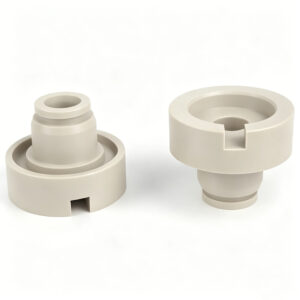
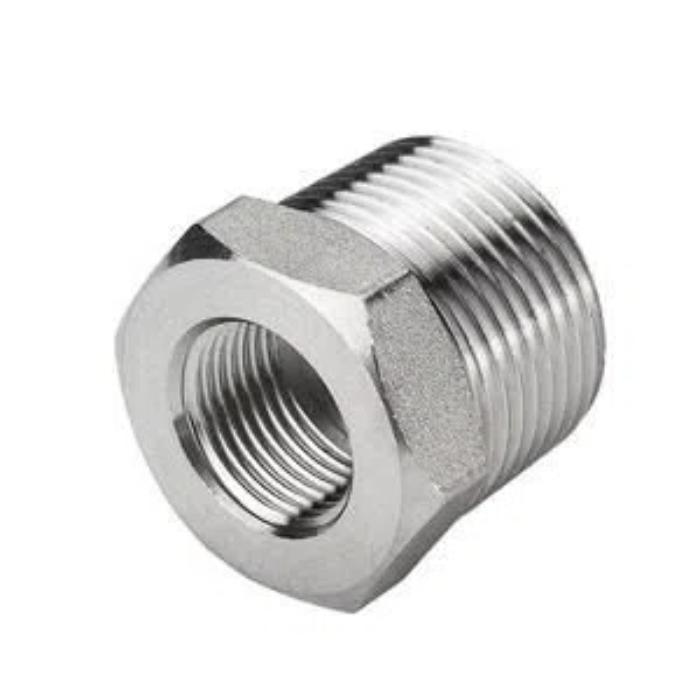
Precision High Quality Threaded Flange Bushing 304 Stainless Steel Flange Bushing Adapter
Request a Quote
Enter the quantity you need and add to your quote list for pricing inquiries.
Product Details
A threaded flange bushing is a pipe fitting that combines a flange on one end with male or female threads on the other, used to reduce pipe size or transition between threaded pipe and flanged connections. It typically features a hexagonal body for easy wrenching. Manufactured from carbon steel, stainless steel, brass, or alloy steel. Available in custom reducing sizes from 1/2 inch to 6 inches, thread types including NPT, BSP, and metric, and pressure ratings up to 3000 PSI. Features include precision machined threads, raised face sealing surface, and corrosion resistant finishes. Suitable for water treatment, chemical processing, oil and gas, and industrial piping systems. Custom bushings available with specific thread standards and flange dimensions.
What Is a Threaded Flange Bushing?
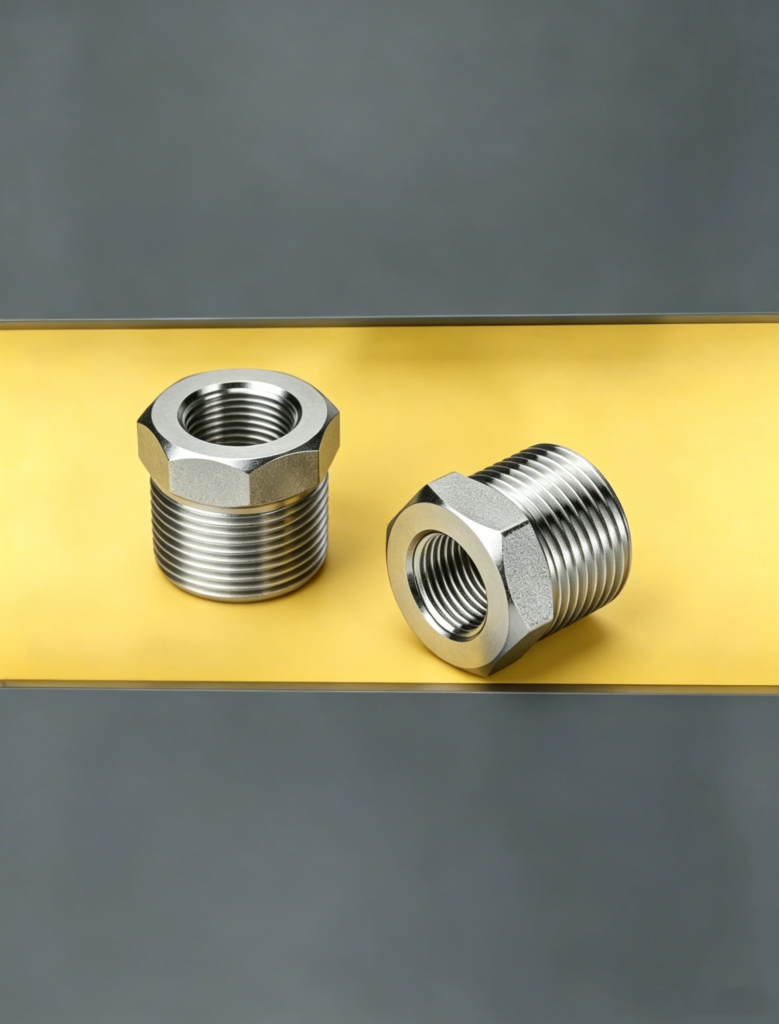
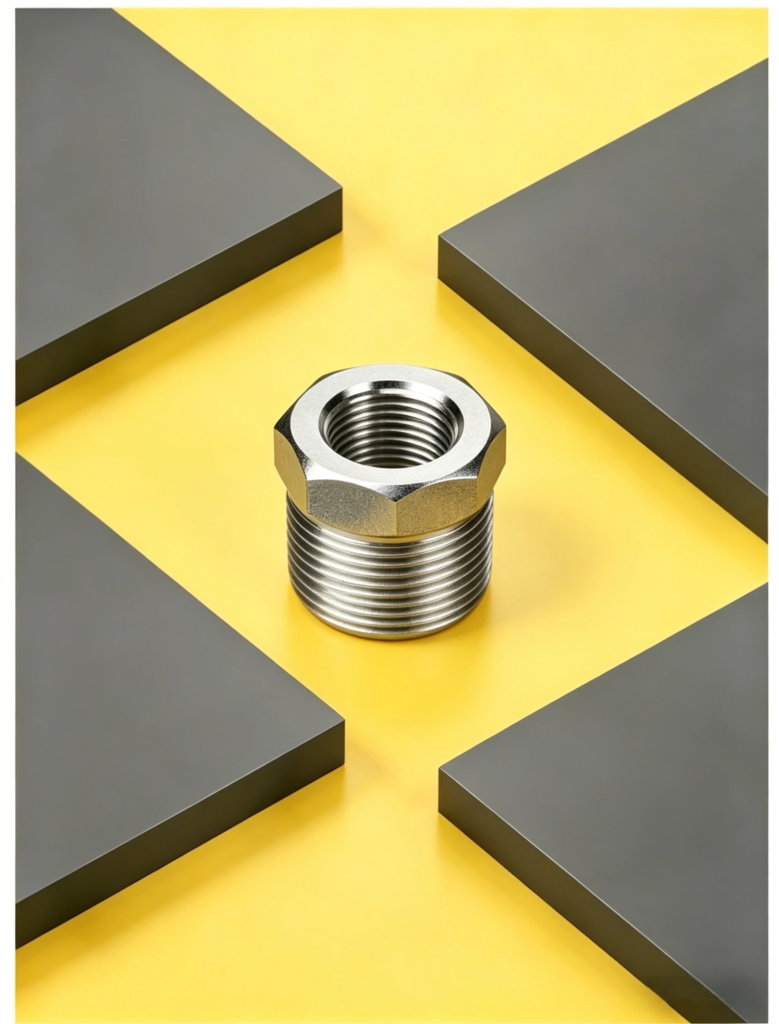
A threaded flange bushing is a hybrid pipe fitting featuring a flange on one end and machined threads on the opposite end, typically with a hexagonal body for easy wrenching. Unlike standard bushings that have threads on both ends, it provides a flanged connection on one side for bolting to equipment or another flange, while the threaded side connects to threaded pipe. This design is commonly used for reducing pipe size in threaded piping systems.
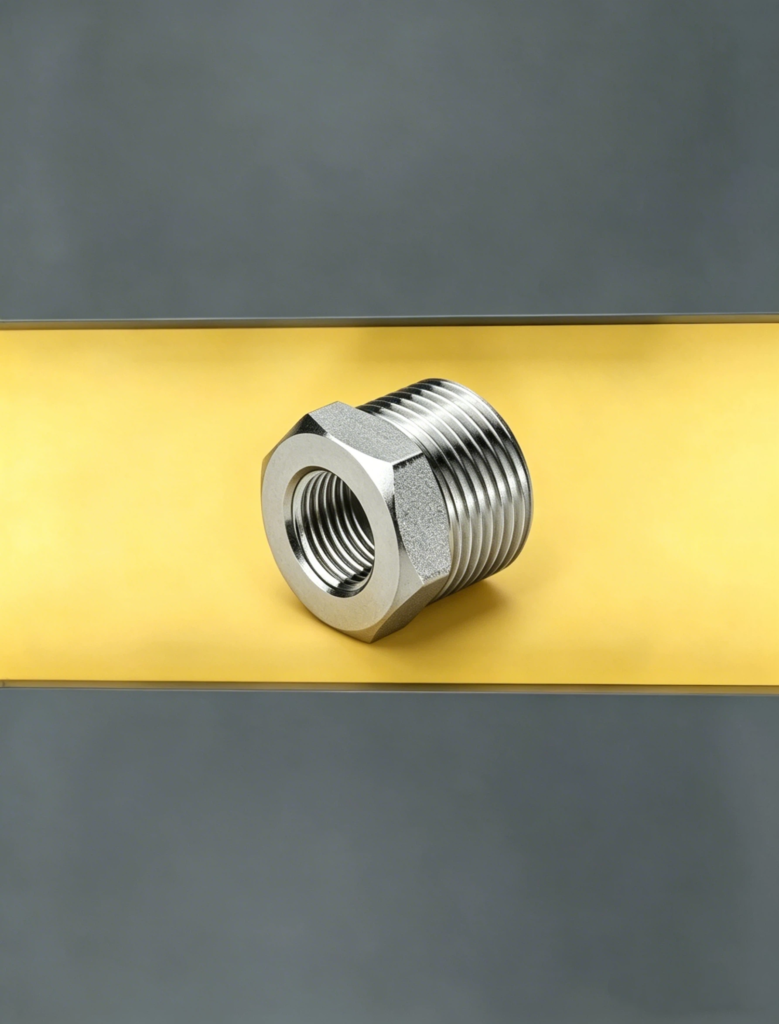
It is characterized by its flange face, threaded end, hex body, and reducing bore. Typical features include a raised face or flat face sealing surface, pre-drilled bolt holes on a standard bolt circle, precision machined threads (NPT, BSP, or metric), a hexagonal body for wrenching, and a reducing bore that transitions from a larger flange size to a smaller thread size. Sizes typically range from 1/2 inch to 6 inches, with pressure ratings up to 3000 PSI. It provides a compact, cost-effective alternative to a separate reducer and flange adapter.
How a Threaded Flange Bushing Works:
The threaded flange bushing works by providing a reducing transition within a single fitting. The larger flange end bolts to a mating flange on a valve, pump, or other equipment. The smaller threaded end screws into or onto threaded pipe using thread sealant. The hexagonal body allows easy tightening with a wrench. The reducing bore smoothly transitions from the larger flange ID to the smaller thread ID, minimizing flow turbulence.
This design eliminates the need for a separate reducer and threaded flange adapter, reducing the number of joints and potential leak points. It is particularly useful in tight spaces where a reducer and adapter would not fit.
Common Materials for Threaded Flange Bushing:
Carbon Steel is the most common material for threaded flange bushing production. Grade A105 offers good strength and weldability. Suitable for water, oil, gas, and steam applications.
Stainless Steel provides superior corrosion resistance. Grades 304 and 316 are common for chemical, food, and marine environments. Suitable for corrosive fluids and sanitary applications.
Brass offers good corrosion resistance and machinability. Suitable for low-pressure water, air, and instrumentation applications.
Alloy Steel provides high-strength for high-pressure applications. Suitable for oil and gas and high-temperature services.
Cast Iron offers cost-effective solution for low-pressure water and drainage applications.
Types of Threaded Flange Bushing:
Male Threaded Flange Bushing:
A threaded flange bushing with external threads on the reducing end. Screws into a female threaded fitting or pipe. Most common configuration.
Female Threaded Flange Bushing:
A threaded flange bushing with internal threads on the reducing end. Accepts a male threaded pipe or fitting.
NPT Threaded Flange Bushing:
A threaded flange bushing with National Pipe Taper threads. Most common in North America. Provides leak-proof seal without gasket.
BSP Threaded Flange Bushing:
A threaded flange bushing with British Standard Pipe threads. Common in Europe and Asia. Available in parallel (BSPP) or tapered (BSPT).
Hex Flange Bushing:
A threaded flange bushing with a hexagonal body for easy wrenching. Standard configuration.
Key Specifications:
| Parameter | Typical Range |
| Flange Size | 1/2 to 6 inches |
| Thread Size | 1/2 to 6 inches (reducing) |
| Thread Type | NPT, BSP, metric |
| Pressure Rating | 150 to 3000 PSI |
| Material | Carbon steel, stainless steel, brass |
| Flange Face | Raised face (RF), flat face (FF) |
| Body Type | Hexagonal, round |
Applications Across Industries:
Water Treatment:
Threaded flange bushing connects smaller threaded instrumentation lines to larger flanged piping systems. Compact design fits in crowded instrument panels.
Chemical Processing:
Threaded flange bushing reduces from flanged chemical reactors to threaded sampling ports. Stainless steel resists corrosion.
Oil and Gas:
Threaded flange bushing connects flanged wellhead equipment to threaded gauge and sensor connections. High-pressure ratings handle wellhead pressures.
Industrial Piping:
Threaded flange bushing provides reducing transitions in steam, water, and compressed air systems.
HVAC Systems:
Threaded flange bushing connects flanged pumps and chillers to smaller threaded branch lines.
Excellent Case: Chemical Reactor Sampling Port
Background: A chemical plant needed to install a threaded 1/2-inch sampling port on an existing 4-inch flanged reactor nozzle. Space was limited, and welding was not permitted due to flammable residues.
Solution: A threaded flange bushing was selected with 4-inch flange on one end and 1/2-inch NPT female threads on the other. The bushing was made from 316 stainless steel for corrosion resistance.
Results:
- Installation Time: 20 minutes versus 2 hours for welded reducer
- Space: Single fitting replaced two fittings (reducer + adapter)
- Fire Hazard: No hot work permit required
- Leak-Free: Zero leaks after 1 year of service
- Material: 316 stainless steel resisted chemical attack
This case demonstrates how this production enables compact, weld-free reducing connections in chemical plants.
Common Failure Modes:
Understanding potential failures helps with preventive maintenance. Thread leakage from improper sealant, prevented by using PTFE tape or pipe dope. Gasket leakage from insufficient bolt torque, prevented by proper torque procedures. Thread galling in stainless steel, prevented by anti-seize lubricant. Body cracking from over-torquing, prevented by using proper tools.
Conclusion:
The threaded flange bushing represents a compact, cost-effective solution for reducing pipe sizes or transitioning between threaded and flanged connections. By combining reducing and adapting functions into a single fitting, it reduces joint count, saves space, and simplifies installation. By understanding the types, materials, and selection criteria outlined in this guide, the right threaded flange bushing can be selected for any application—from chemical reactors to water treatment plants.