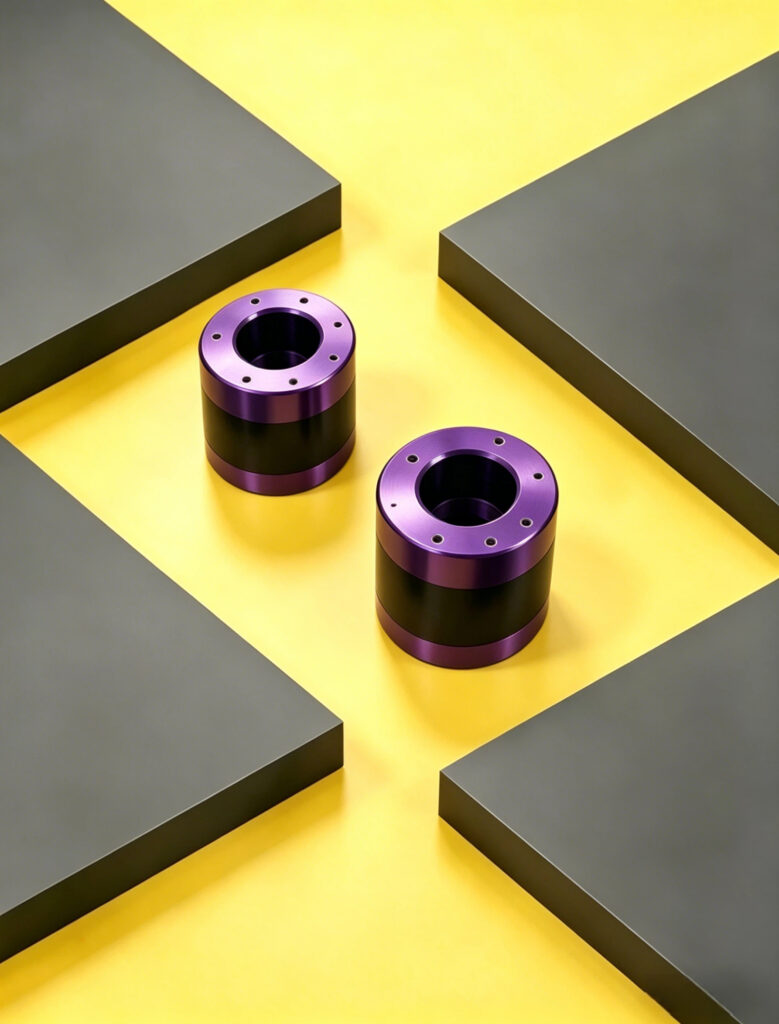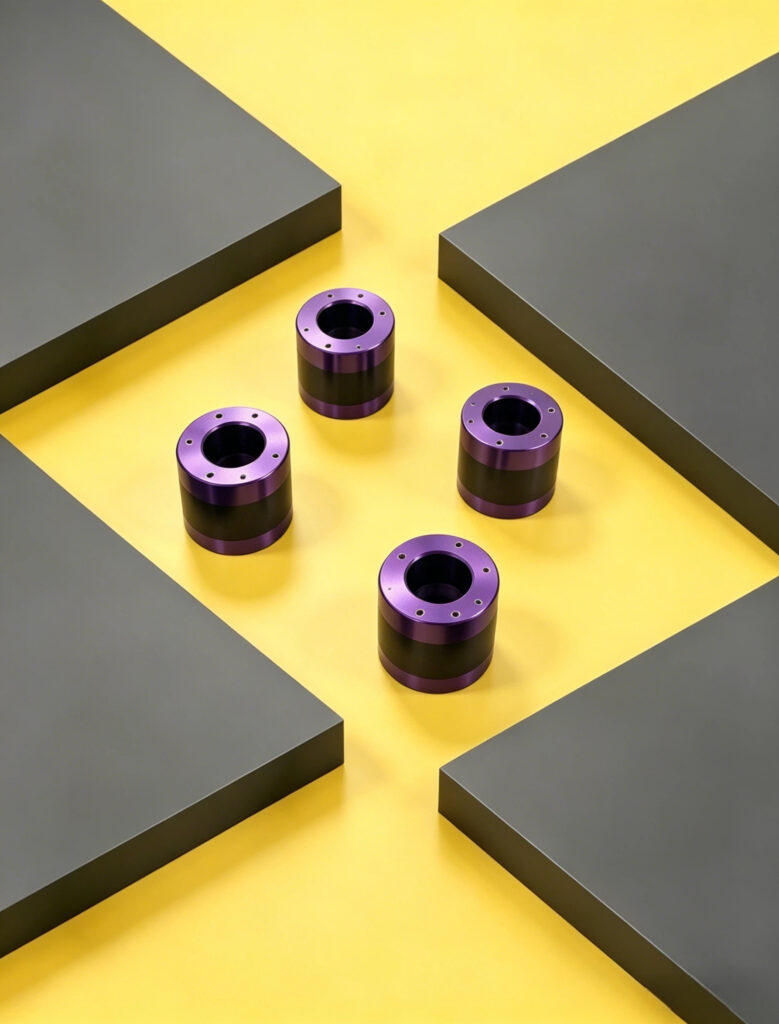
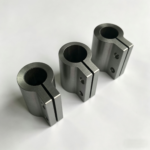
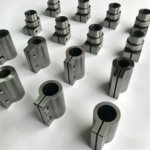
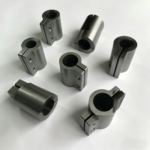
Custom Reliable Clamping Shaft Coupling Bore Range 12mm to 60mm Versatile Clamping Shaft Coupling
Request a Quote
Enter the quantity you need and add to your quote list for pricing inquiries.
Product Details
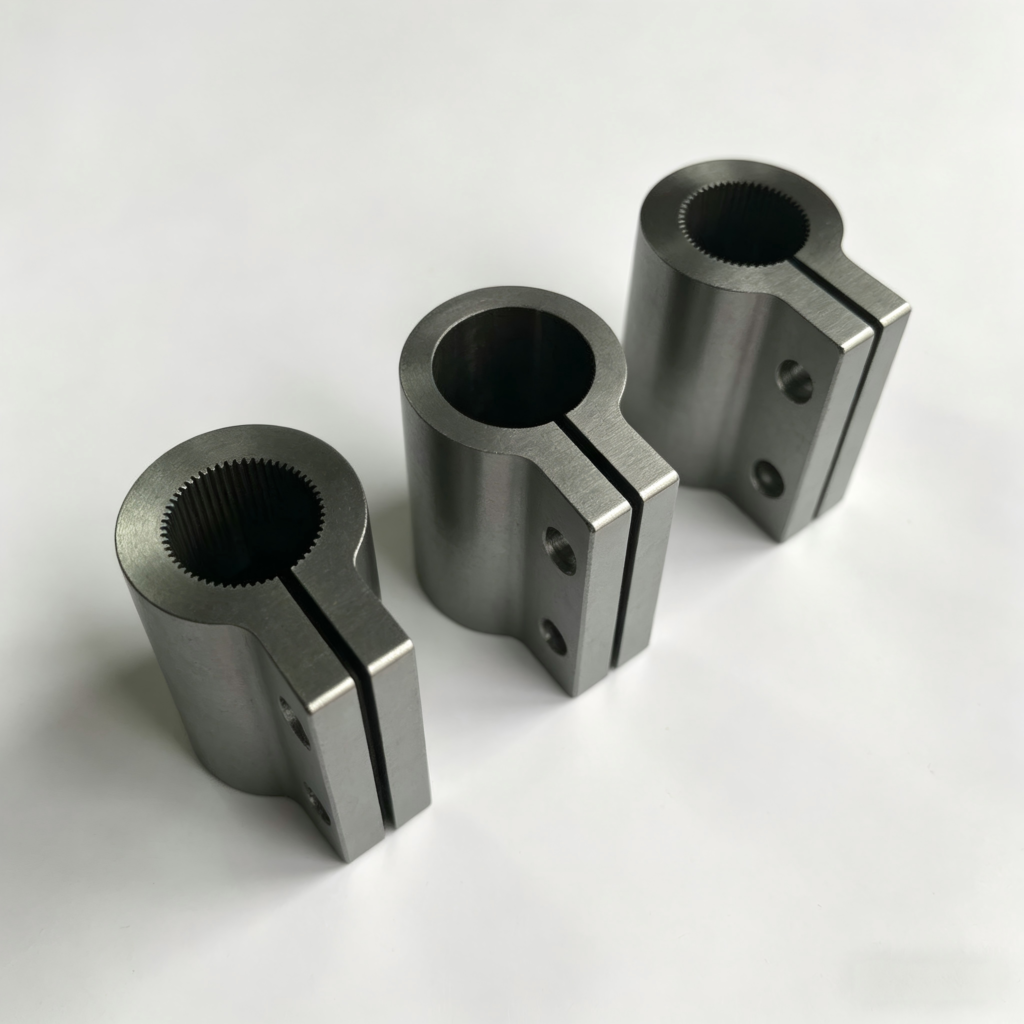
A clamping shaft coupling is a mechanical device that connects two rotating shafts using friction-based clamping force instead of keys or set screws. It provides a secure, backlash-free connection without damaging shaft surfaces. The split design allows easy installation and removal without disconnecting equipment. Manufactured from steel, stainless steel, or aluminum. Available in custom bore sizes from 5mm to 100mm, outer diameters from 15mm to 120mm, and lengths from 10mm to 80mm. Features include precision machined bores, zero backlash operation, and balanced design for high speeds. Custom couplings available with specific bore tolerances, materials, and surface finishes including zinc plating and anodizing.
What Is a Clamping Shaft Coupling?
A clamping shaft coupling is a mechanical device that connects two rotating shafts together using friction-based clamping force, rather than keys, set screws, or splines. Unlike traditional couplings that require shaft modification, the clamping shaft coupling uses bolts or screws to compress the coupling bore around the shafts, creating a secure, backlash-free connection that can be easily installed and removed without damaging shaft surfaces.
The clamping shaft coupling is characterized by its split or solid body design with clamping bolts, precision-machined bore for accurate shaft fit, and friction-based torque transmission. Typical features include a split design that allows installation without shaft disassembly, multiple clamping bolts for uniform pressure distribution, zero backlash operation for precision positioning, concentric bore for accurate shaft alignment, and balanced construction for high-speed applications. Bore sizes typically range from 5mm to 100mm, outer diameters from 15mm to 120mm, and overall lengths from 10mm to 80mm. The clamping shaft coupling eliminates shaft damage from set screws, accommodates misalignment, and simplifies maintenance.
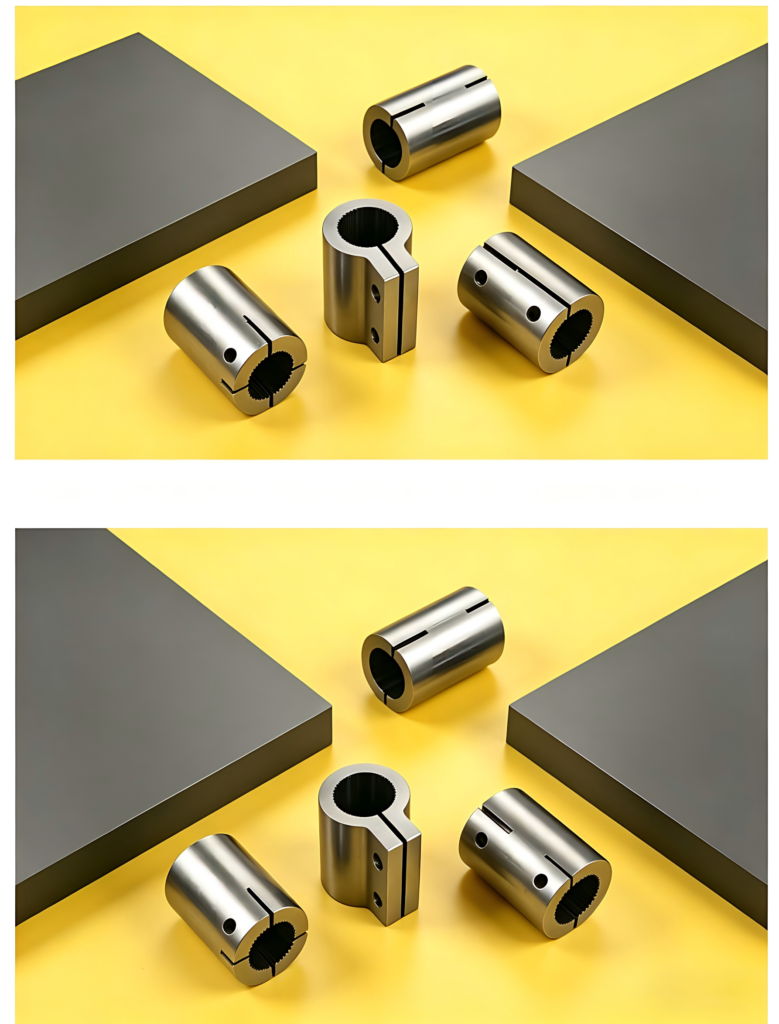
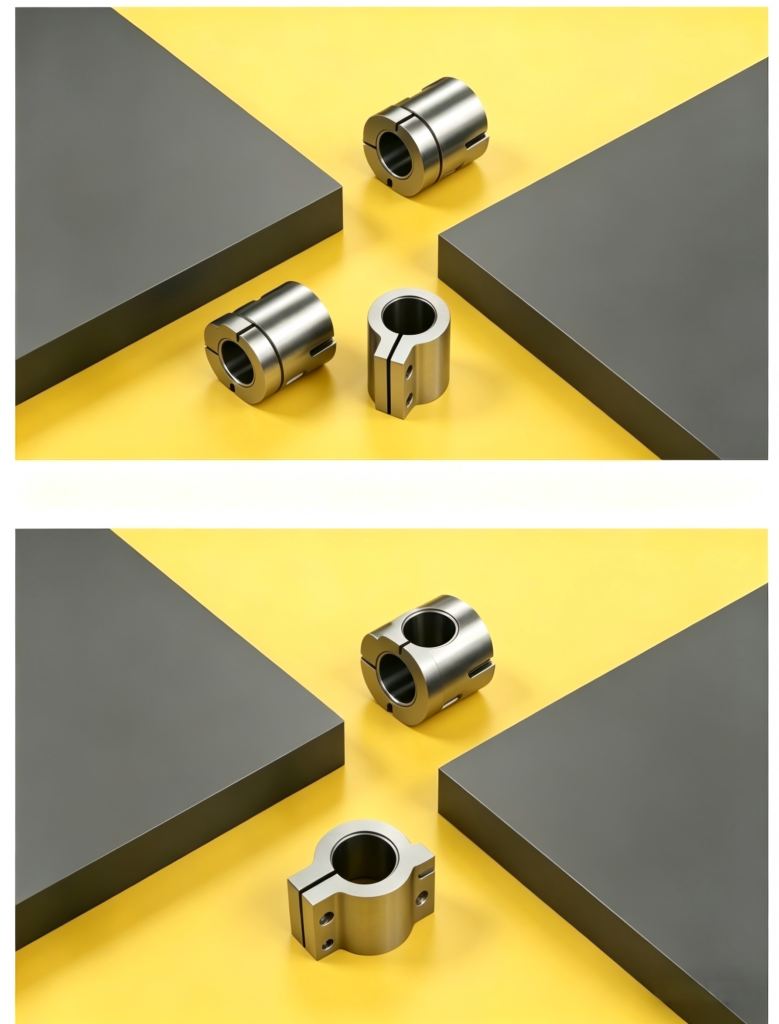
Common Materials for Clamping Shaft Coupling:
Steel:
Carbon or alloy steel offers high strength, excellent torque capacity, and good durability. Zinc plating provides corrosion resistance. Suitable for heavy-duty industrial applications, high-torque power transmission, and demanding environments.
Stainless Steel:
Stainless steel in grades 303 and 304 provides superior corrosion resistance. Suitable for medical devices, food processing equipment, marine applications, and cleanroom environments where rust resistance is critical.
Aluminum:
Aluminum is lightweight and naturally corrosion resistant. Anodizing provides enhanced wear resistance and color options. Suitable for low-inertia applications, robotics, aerospace, and high-speed systems where weight reduction is important.
Types of Clamping Shaft Couplings:
Single Split Clamping Shaft Coupling:
Features one split through the entire coupling body. Provides uniform clamping force around the shaft. Suitable for general purpose applications requiring moderate torque transmission and easy installation.
Double Split Clamping Shaft Coupling:
Features two splits at 90 or 180 degrees, allowing independent clamping on two shafts. Suitable for connecting two shafts with different diameters or as a shaft-to-shaft coupler with independent tightening.
Rigid Clamping Shaft Coupling:
Provides solid, inflexible connection between shafts with zero angular or axial compliance. Suitable for applications requiring exact shaft alignment such as linear actuators and lead screw connections.
Flexible Clamping Shaft Coupling:
Incorporates a flexible element such as a bellows or elastomer between clamping hubs. Accommodates angular, parallel, and axial misalignment while providing zero-backlash torque transmission. Suitable for servo motors and precision positioning systems.
Reducing Clamping Shaft Coupling:
Features different bore sizes on each end, allowing connection of shafts with different diameters without additional adapters.
Applications Across Industries:
Servo Motor and Encoder Connections:
Clamping shaft couplings connect servo motors to lead screws, ball screws, or timing belt pulleys. Zero backlash ensures precise positioning, while the clamping design allows easy removal for maintenance without disconnecting the motor.
Linear Actuators and Lead Screws:
Clamping shaft couplings connect drive motors to lead screws in linear actuators. The clamping design prevents axial play and ensures accurate load positioning without shaft damage.
Conveyor and Material Handling:
Clamping shaft couplings connect drive shafts to sprockets, pulleys, or gearboxes in conveyor systems. Easy installation reduces downtime during maintenance and replacement.
Robotics and Automation:
Clamping shaft couplings connect servo motors to joint shafts in robotic arms. Lightweight aluminum couplings reduce inertia while providing zero-backlash torque transmission for precise motion control.
Packaging Machinery:
Clamping shaft couplings connect drive components in high-speed packaging equipment. Balanced design allows smooth operation at elevated speeds with minimal vibration.
Medical Devices:
Clamping shaft couplings in diagnostic equipment, surgical robots, and imaging systems require stainless steel construction for cleanroom compatibility and corrosion resistance.
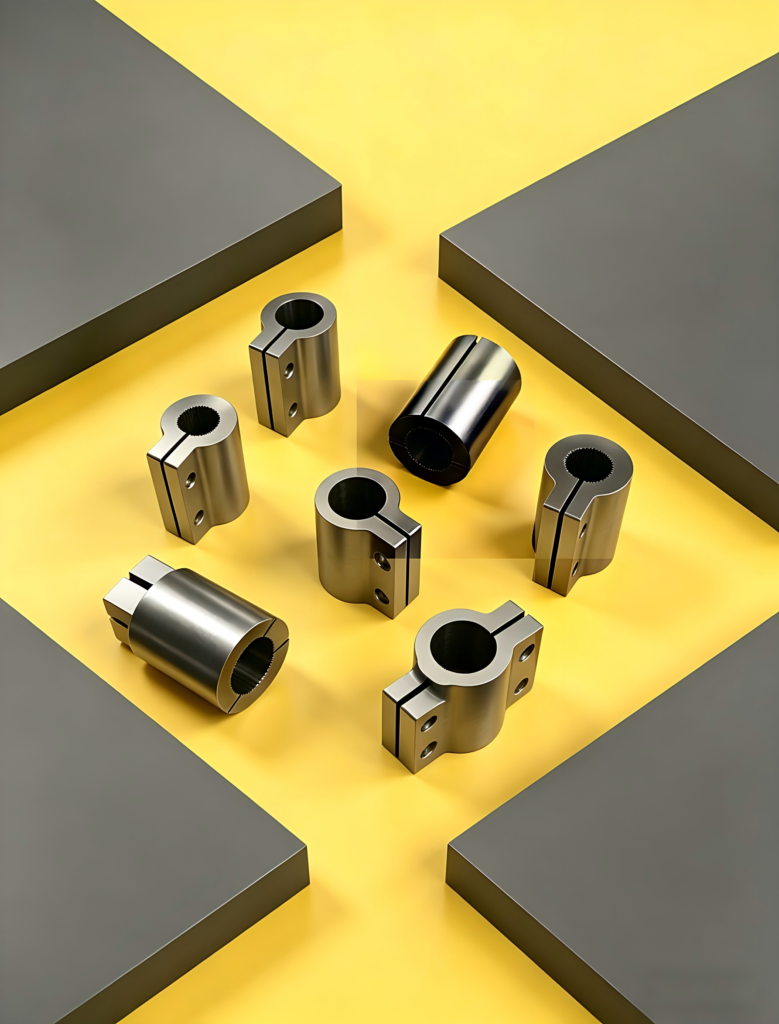
Excellent Case: CNC Machine Lead Screw Retrofit
Background: A CNC machine shop experienced positioning errors due to backlash in keyed shaft couplings. The set screws also damaged lead screw shafts, requiring expensive replacements. Maintenance required complete motor disconnection.
Solution: A clamping shaft coupling was specified with 16mm bore, 40mm outer diameter, and 50mm length. The coupling was steel with zinc plating, featuring four clamping bolts and zero-backlash design.
Results:
- Backlash: Eliminated completely, improving positioning accuracy by 80 percent
- Shaft Protection: No shaft damage after 3 years of operation
- Installation Time: Reduced from 20 minutes to 5 minutes per coupling
- Maintenance: Coupling removal allowed lead screw access without motor disconnection
- Torque Capacity: Achieved 120 Nm rating, exceeding original requirement by 50 percent
This case demonstrates how the clamping shaft coupling eliminates backlash and protects shafts in precision CNC applications.
Installation Best Practices:
Proper installation ensures the clamping shaft coupling performs reliably. Clean both shafts and coupling bores thoroughly to remove oil, dirt, or debris. For split designs, separate the two halves and place them around the shafts. Align the coupling position on the shafts. Insert and hand-tighten clamping bolts. Tighten bolts evenly in a cross pattern using a torque wrench to manufacturer specifications. Verify concentricity using a dial indicator, adjusting if necessary. For high-speed applications, check dynamic balance after installation. Periodically retorque bolts in high-vibration applications.
Conclusion:
The clamping shaft coupling represents a superior solution for connecting shafts in precision mechanical systems, offering zero backlash operation, shaft protection, and easy installation. By eliminating keys and set screws, it prevents shaft damage while providing reliable, maintenance-friendly torque transmission. By understanding the types, materials, and selection criteria outlined in this guide, the right clamping shaft coupling can be selected for any application—from standard servo motor connections to custom engineered solutions for demanding robotics, medical, and industrial automation environments.