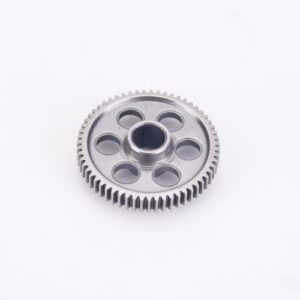
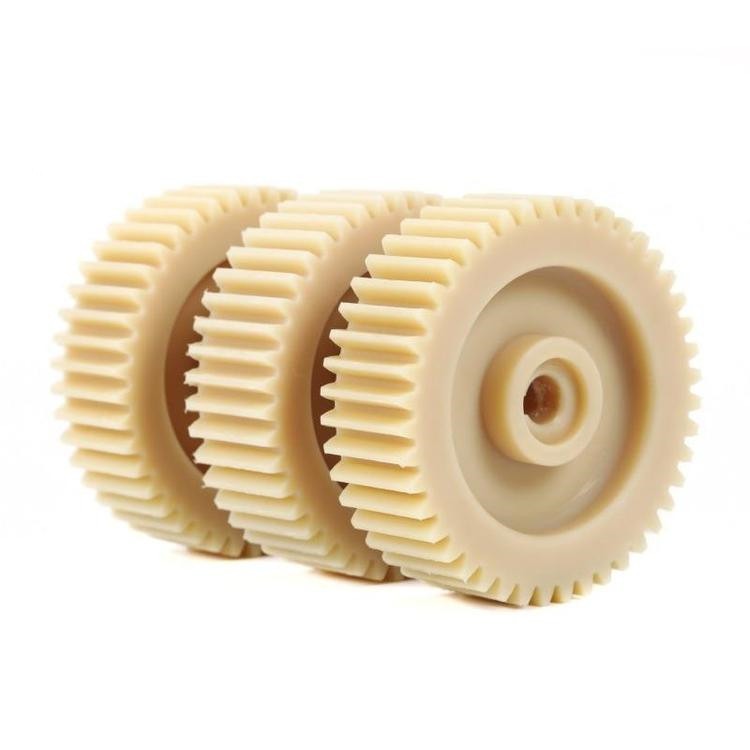

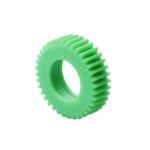
High Performance Plastic Spur Gear 20 to 80 Teeth Range Excellent Wear Resistance Premium Quality Long Service Life
Request a Quote
Enter the quantity you need and add to your quote list for pricing inquiries.
Product Details
Precision molded plastic spur gear delivers smooth quiet operation and reliable power transmission for light to medium duty applications. Manufactured from engineering grade polymers such as POM nylon or ABS for excellent wear resistance low friction and dimensional stability. Lightweight design reduces inertia while corrosion resistant construction eliminates the need for lubrication in many applications. Ideal for consumer electronics office automation robotics toys and medical devices where cost effectiveness and low noise operation are critical.
What Is a Plastic Spur Gear?
A plastic spur gear is a cylindrical gear with straight teeth cut parallel to the axis of rotation, manufactured from engineering grade polymer materials rather than metal. Spur gears are the simplest and most common type of gear, designed to transmit power and motion between parallel shafts. The teeth of a spur gear engage directly with the teeth of another spur gear, creating a positive drive mechanism that converts rotational motion with high efficiency.
Plastic spur gears are typically produced through injection molding, a manufacturing process that forces molten plastic into a precision machined mold cavity. This process allows for high volume production with excellent repeatability and dimensional consistency. Common materials used for plastic spur gears include acetal (POM), nylon (polyamide), ABS, polycarbonate (PC), and high performance engineering plastics such as PEEK and PET.
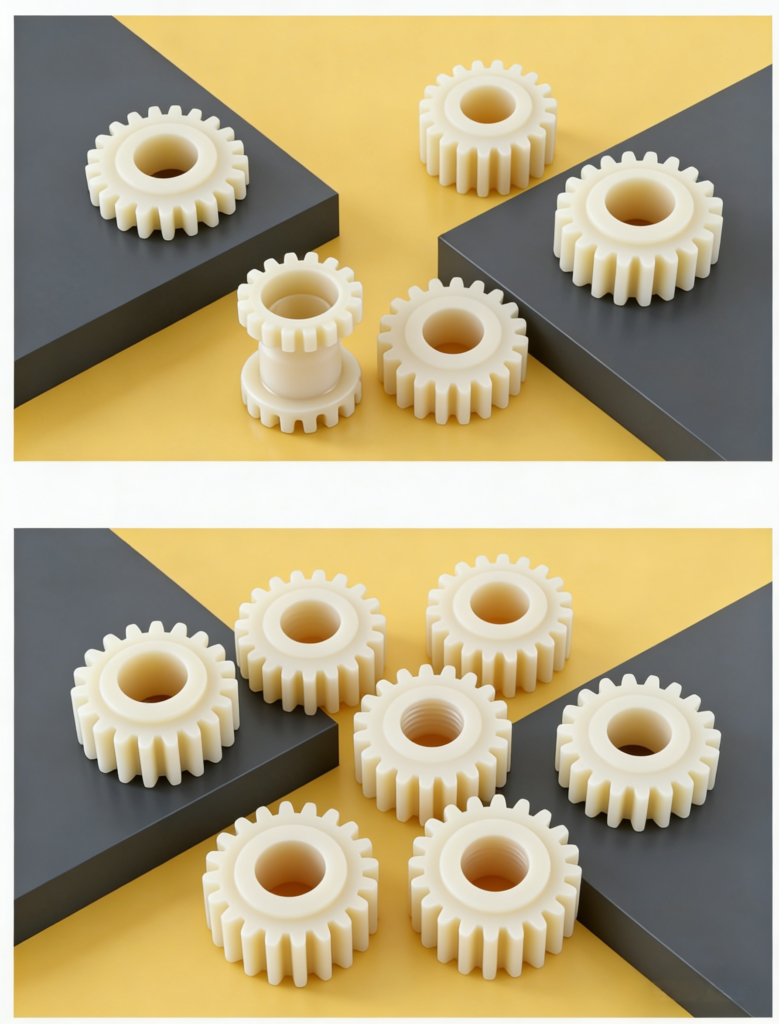
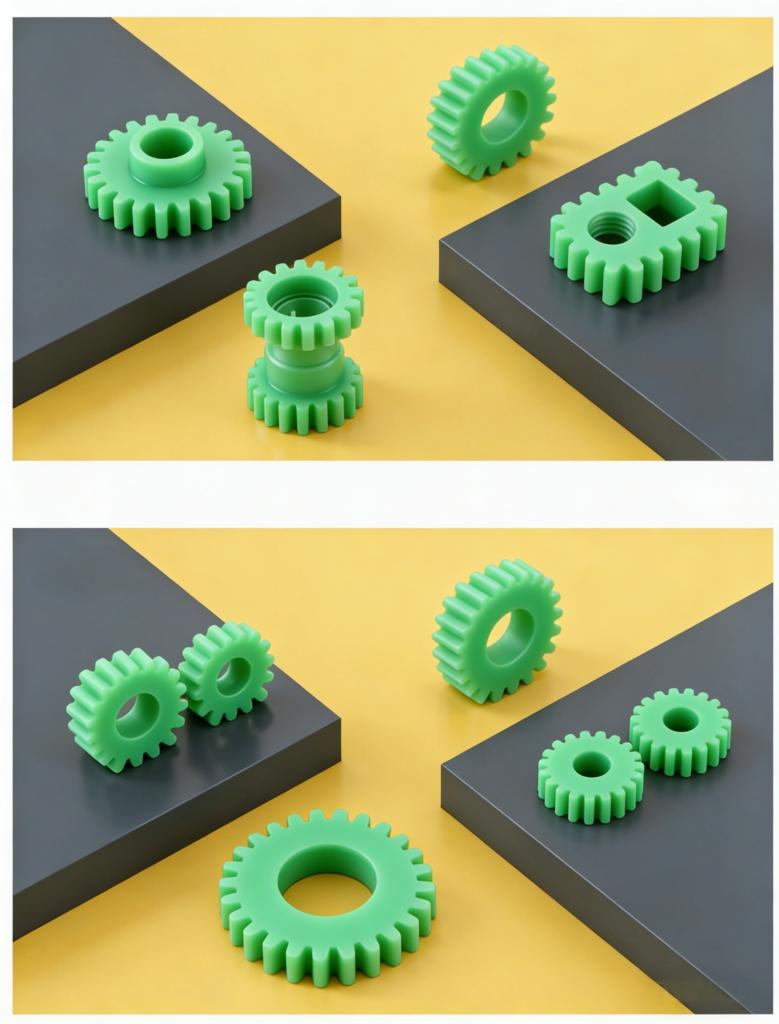
Common Materials for Plastic Spur Gears:
The performance characteristics of a plastic spur gear are largely determined by the material from which it is manufactured. Different applications require different material properties:
Acetal (POM – Polyoxymethylene):
Acetal is the most widely used material for plastic spur gears. It offers excellent dimensional stability, low friction coefficient, high strength and stiffness, good wear resistance, and natural lubricity. Acetal gears operate well in moderate temperature environments up to approximately 80–100°C. Typical applications include automotive components, consumer electronics, office equipment, and small appliances.
Nylon (Polyamide):
Nylon provides high strength and toughness, excellent wear resistance, good fatigue resistance, and the ability to absorb impact loads. Nylon has higher moisture absorption than acetal, which can affect dimensional stability. It can operate at temperatures up to approximately 100–120°C. Typical applications include industrial machinery, power tools, automotive systems, and high-load applications.
ABS (Acrylonitrile Butadiene Styrene):
ABS offers good impact resistance, ease of molding, and low cost. It has lower strength and wear resistance compared to acetal or nylon. Typical applications include toys, consumer products, low-load applications, and prototypes.
Polycarbonate (PC):
Polycarbonate provides very high impact strength and good dimensional stability, with operating temperatures up to approximately 120°C. It has higher friction than acetal and may require lubrication. Typical applications include safety-critical components, transparent gear applications, and medical devices.
PEEK (Polyether Ether Ketone):
PEEK is a high-performance engineering plastic offering exceptional strength, very high temperature resistance (up to 250°C), excellent chemical resistance, and outstanding wear resistance. However, it is significantly more expensive than other plastics. Typical applications include aerospace, medical implants, high-temperature environments, and chemical processing equipment.
PET (Polyethylene Terephthalate):
PET provides good strength, stiffness, and wear resistance with low moisture absorption. It is often used with glass fiber reinforcement for increased strength. Typical applications include automotive components and industrial gears.
Key Advantages of Plastic Spur Gears:
Plastic spur gears offer numerous benefits over their metal counterparts, making them the preferred choice for many applications:
Lightweight:
Plastic gears typically weigh 80–90% less than equivalent steel gears. This weight reduction is critical in portable devices, drones, robotics, and any application where minimizing mass improves performance or reduces energy consumption.
Quiet Operation:
Plastic materials naturally dampen vibration and noise better than metals. Plastic spur gears operate with significantly lower acoustic noise compared to metal gears, making them ideal for office equipment, consumer electronics, medical devices, and any application where noise is a concern.
Corrosion Resistance:
Unlike metal gears that can rust or corrode when exposed to moisture, chemicals, or harsh environments, plastic gears are inherently corrosion resistant. This eliminates the need for protective coatings or special storage conditions.
Self-Lubricating Properties:
Many engineering plastics, particularly acetal and nylon, exhibit natural lubricity. This reduces friction and wear, often eliminating the need for external lubrication. Maintenance requirements are significantly reduced compared to metal gears that require regular greasing.
Cost-Effective:
Injection molding of plastic gears is a high-speed automated process capable of producing thousands of parts per hour. For medium to high production volumes, plastic spur gears are significantly less expensive than machined metal gears.
Design Flexibility:
Plastic injection molding allows for complex geometries that would be difficult or expensive to machine in metal. Features such as integral mounting hubs, snap fits, and complex tooth modifications can be molded directly into the gear.
Applications Across Industries:
The versatility of plastic spur gears makes them suitable for a vast range of industries and applications:
Consumer Electronics: Plastic spur gears are found in printers, scanners, copiers, CD/DVD drives, cameras, gaming controllers, and home appliances. Their quiet operation and low cost are particularly valued in this sector.
Office Automation: Photocopiers, fax machines, paper handling systems, and mailing equipment rely on plastic spur gears for reliable paper transport and mechanism actuation.
Automotive: Plastic spur gears are used in power window mechanisms, seat adjusters, HVAC actuators, mirror controls, instrument clusters, and fuel system components. Weight reduction and corrosion resistance are key drivers in automotive applications.
Robotics: Hobby and educational robots, as well as some industrial robots, use plastic spur gears in drivetrain and actuator systems. The lightweight nature of plastic reduces motor power requirements.
Medical Devices: Infusion pumps, diagnostic equipment, surgical tools, and patient monitoring devices utilize plastic spur gears where quiet operation, corrosion resistance, and compatibility with sterilization processes are essential.
Toys and Hobbies: Remote control vehicles, model trains, construction sets, and mechanical toys rely on low cost plastic spur gears for power transmission.
Appliances: Coffee makers, washing machines, dishwashers, and vacuum cleaners contain plastic spur gears in their timing and drive mechanisms.
Agricultural Equipment: Certain low load agricultural applications use plastic spur gears for their corrosion resistance and ability to operate without lubrication.
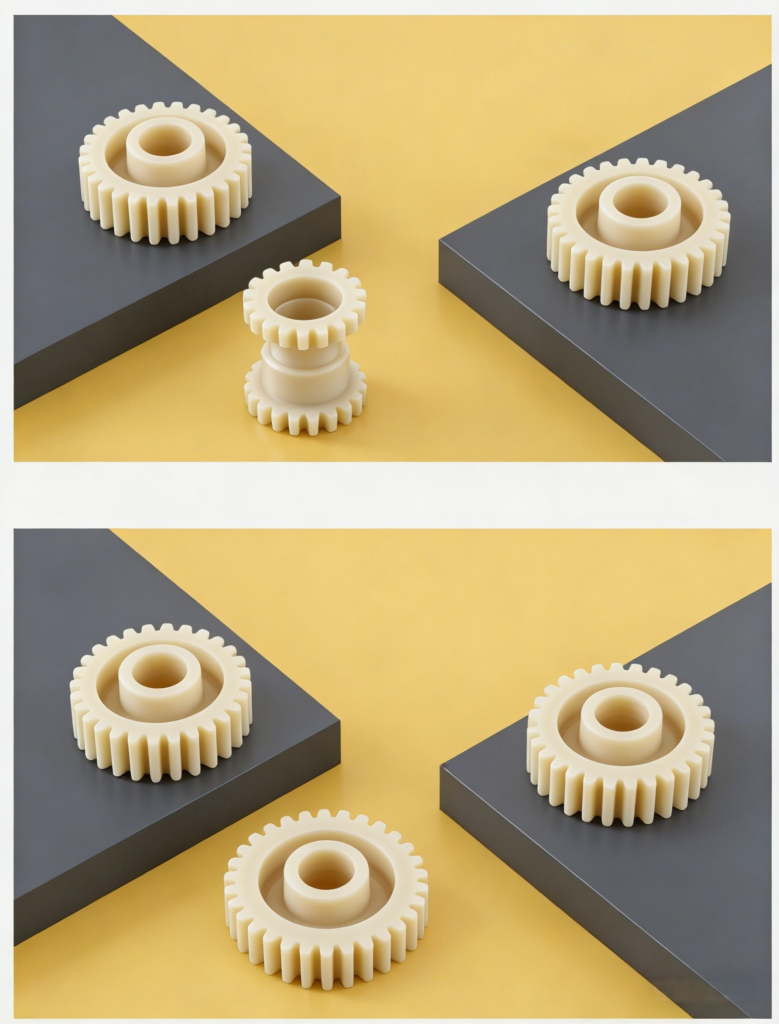
How to Select the Right Plastic Spur Gear:
Choosing the optimal plastic spur gear for your application requires careful consideration of several factors:
Load Requirements: Calculate the torque and forces the gear must transmit. Higher loads require stronger materials such as nylon or PEEK, and may require larger tooth sizes or wider gear faces.
Operating Speed: Higher speeds generate more heat from friction. Acetal is often preferred for high speed applications due to its low friction coefficient and good thermal stability.
Temperature Environment: Consider both the maximum operating temperature and the temperature range during storage. Standard plastics like acetal and nylon are suitable up to approximately 80-100°C, while PEEK can withstand up to 250°C.
Chemical Exposure: If the gear will be exposed to oils, solvents, cleaning agents, or other chemicals, verify material compatibility. PEEK and PTFE filled materials offer excellent chemical resistance.
Moisture Environment: Nylon absorbs moisture, which can cause dimensional changes. Acetal and PET have much lower moisture absorption and better dimensional stability in humid environments.
Noise Requirements: For noise sensitive applications, softer materials or materials with natural damping properties are preferred. Acetal and nylon both offer good noise reduction compared to metal.
Installation and Maintenance Best Practices:
Proper Alignment: Misalignment between mating gears causes uneven tooth loading, accelerated wear, and increased noise. Ensure shafts are parallel and gear faces are properly aligned.
Correct Center Distance: Maintain the recommended center distance between gear shafts. Excessive center distance reduces tooth engagement and can cause skipping. Insufficient center distance causes binding and excessive friction.
Avoid Overloading: Plastic gears have lower strength than metal gears. Avoid shock loads and torque spikes that could cause tooth fracture or deformation.
Consider Lubrication: While many plastic gears are self lubricating, some applications benefit from lubrication. Use only lubricants compatible with the specific plastic material, as some oils and greases can degrade certain polymers.
Temperature Monitoring: Excessive heat accelerates wear and can cause melting or deformation. If gears become too hot to touch, investigate causes such as overloading, misalignment, or insufficient lubrication.
Regular Inspection: Periodically inspect plastic spur gears for signs of wear including tooth deformation, cracking, discoloration, or pitting. Replace worn gears promptly to avoid damage to mating components.
Common Design Considerations:
Tooth Profile: Standard involute tooth profiles are most common. Pressure angles of 20 degrees are standard, though 14.5 degree profiles are sometimes used for lighter loads.
Backlash: Allow adequate backlash (clearance between mating teeth) to accommodate thermal expansion and manufacturing tolerances. Typical backlash for plastic spur gears ranges from 0.05 to 0.15 mm.
Hub Design: Integral hubs provide additional material around the bore for set screws, press fits, or keyways. Consider whether a straight hub, flanged hub, or extended hub is appropriate.
Bore and Mounting: Specify bore diameter and mounting method (press fit, set screw, keyway, or D-shape). Plastic gears can be molded with a variety of bore configurations.
Glass Fiber Reinforcement:Adding glass fiber (typically 10-30%) increases strength, stiffness, and temperature resistance, but reduces impact strength and increases wear on mating components.
Conclusion:
The plastic spur gear represents an outstanding solution for a wide range of power transmission applications. With advantages including lightweight construction, quiet operation, corrosion resistance, self lubricating properties, and cost effectiveness, plastic spur gears have become the default choice for countless products from consumer electronics to automotive systems.
By understanding the material options, application requirements, selection criteria, and design considerations outlined in this guide, engineers and designers can confidently specify plastic spur gears that deliver reliable performance, long service life, and optimal value. Whether you are designing a new product, replacing worn components, or seeking to reduce weight and noise in an existing system, plastic spur gears offer a proven, versatile, and cost effective solution.