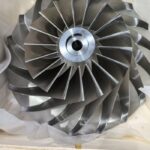
High Reliable OEM Custom Turbocharger Impeller 5 Axis Milled 15 Degree Blade Angle High Efficiency Compressor Wheel
Request a Quote
Enter the quantity you need and add to your quote list for pricing inquiries.
Product Details
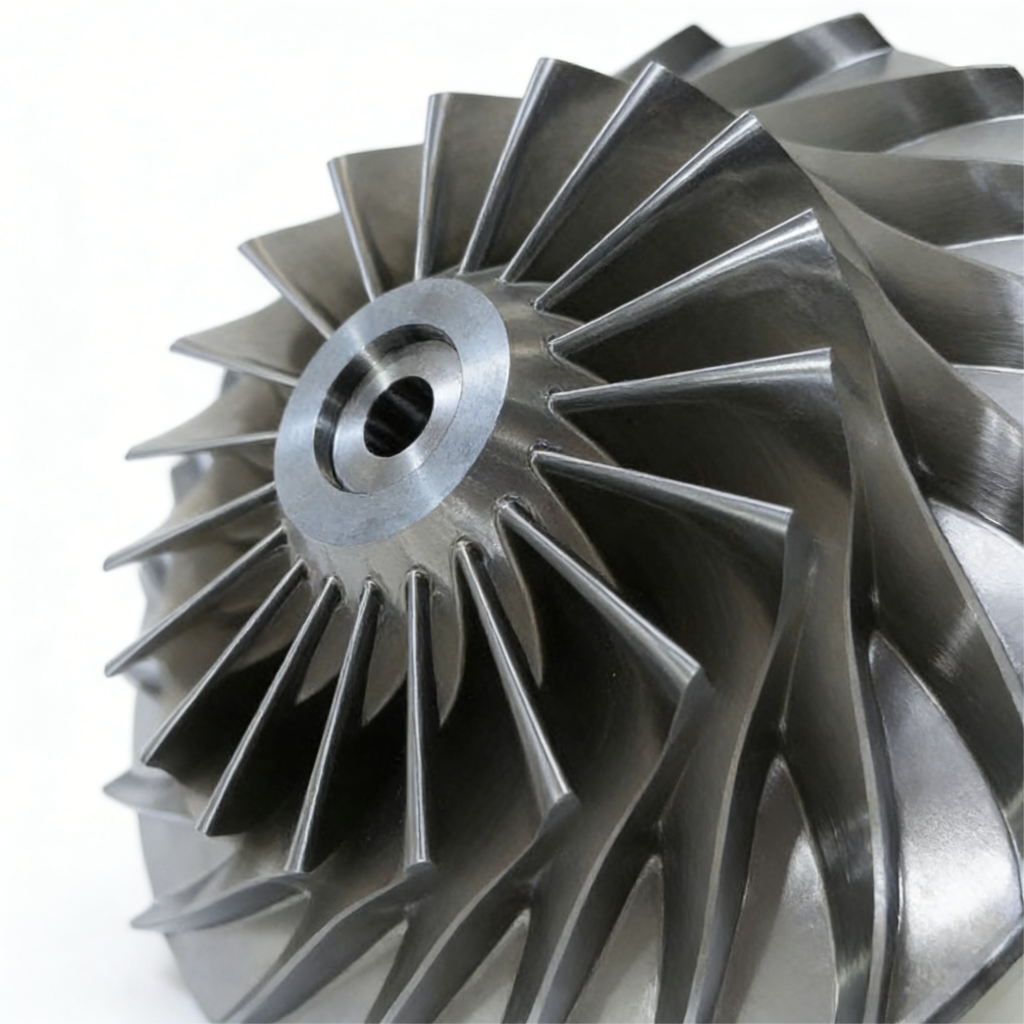
The turbocharger impeller is a precision engineered rotating component that compresses intake air to increase engine power and efficiency. It features carefully designed blades that spin at extremely high speeds to draw in and compress air before delivering it to the engine combustion chamber. Manufactured from high strength materials including cast aluminum, forged aluminum, titanium alloy, and Inconel. Available in custom blade counts, diameters, and trim configurations. Suitable for automotive, diesel, marine, racing, and industrial turbocharger applications. Custom impellers can be engineered with tight tolerances and precision balancing for optimal performance at high RPM.
What Is a Turbocharger Impeller?
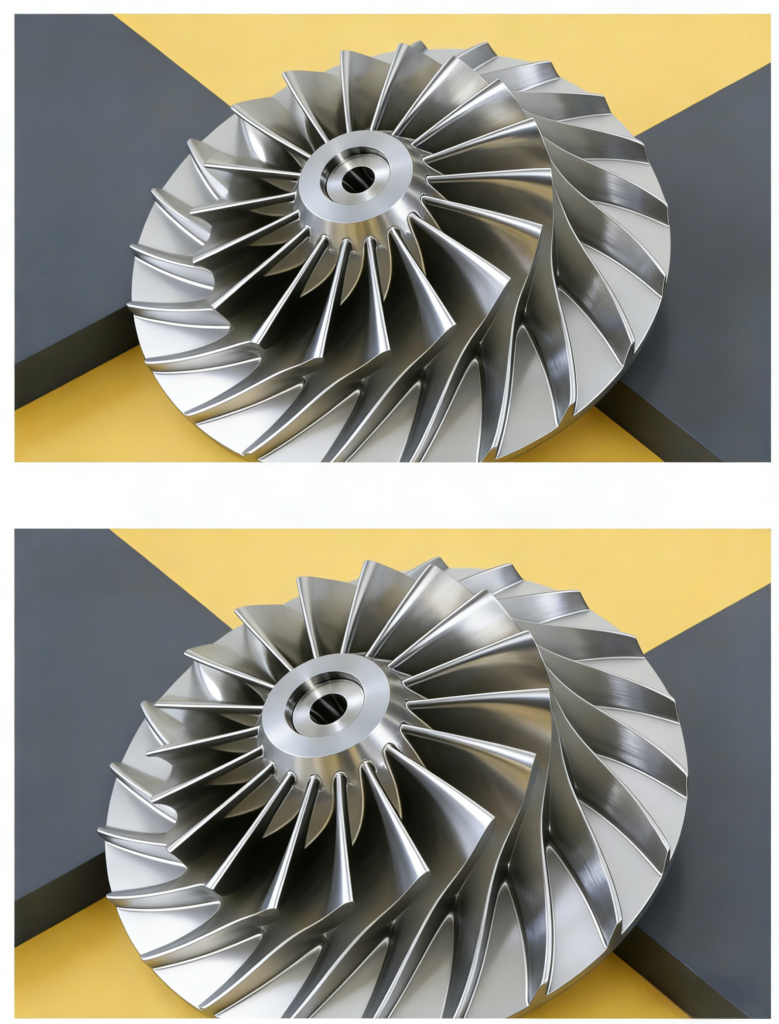
A turbocharger impeller is a rotating component within the turbocharger compressor housing that draws in ambient air and compresses it before delivering it to the engine intake manifold. Also known as the compressor wheel, the turbocharger impeller features carefully engineered blades that accelerate air outward using centrifugal force, increasing both air pressure and density.
This component performs several critical functions. It draws large volumes of ambient air into the turbocharger inlet. It accelerates air to high velocity using rotating blade geometry. It compresses air through centrifugal action as air moves from the impeller center to the outer diameter. It delivers compressed, dense air to the engine for improved combustion. It enables significant power increases without increasing engine displacement.
Available in various sizes, blade configurations, and materials, the turbocharger impeller is fundamental to forced induction systems across virtually every engine application.
How a Turbocharger Impeller Works:
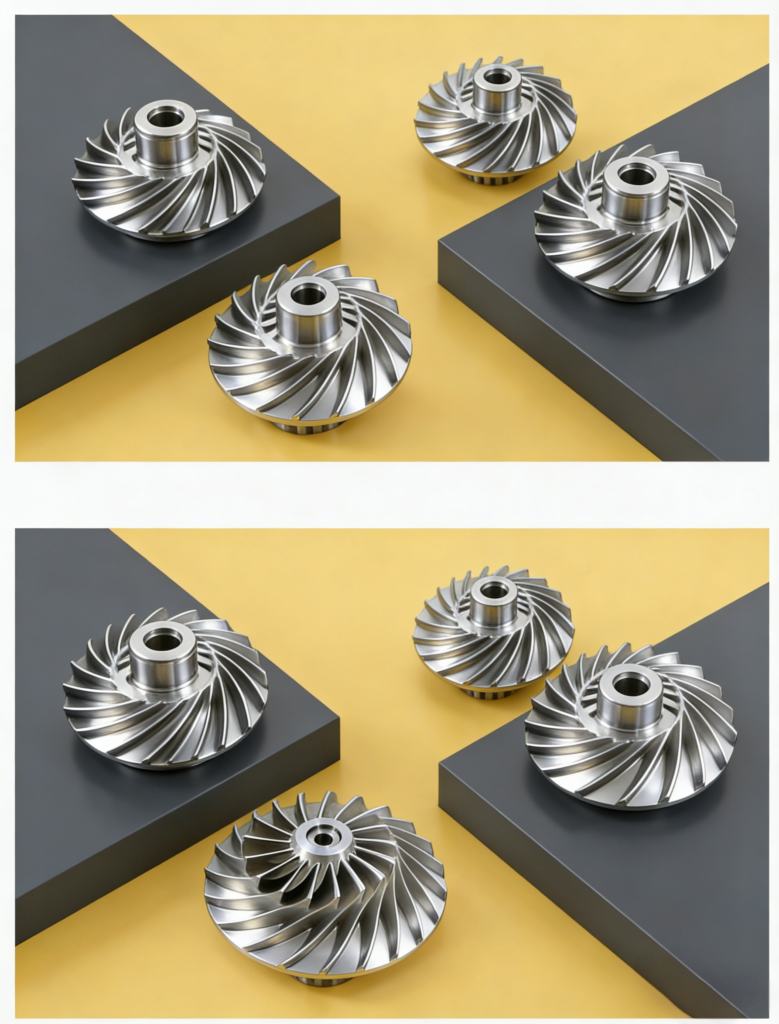
The operation of a turbocharger impeller is based on principles of centrifugal compression. As exhaust gases spin the turbine wheel on the opposite end of the shared shaft, the turbocharger impeller rotates at speeds that can exceed 150,000 RPM. Ambient air enters the center of the impeller (inducer) and is captured by the rotating blades. Centrifugal force throws the air outward toward the impeller outer diameter (exducer). The air gains velocity and pressure as it moves through the diverging passages between blades. The compressed air then enters the diffuser and compressor housing where velocity is converted to additional pressure.
Several critical factors affect impeller performance. Blade geometry determines airflow characteristics and efficiency. Inducer diameter affects how much air the impeller can draw in. Exducer diameter influences pressure generation capability. Trim ratio (inducer squared divided by exducer squared times 100) defines the impeller flow and pressure balance. Material strength determines maximum safe rotational speed.
For optimal performance, the turbocharger impeller must be precisely balanced, manufactured to tight tolerances, and matched to the engine airflow requirements.
Materials for Turbocharger Impellers:
The performance and durability of a turbocharger impeller depend heavily on material selection:
Cast Aluminum:
The most common material for original equipment and aftermarket impellers. A356 or similar aluminum alloys offer good strength, light weight, and cost effectiveness. Suitable for most automotive applications with exhaust gas temperatures up to moderate levels. Limitations include lower strength at very high temperatures and speed.
Forged Aluminum:
Higher strength than cast aluminum due to refined grain structure. Offers improved fatigue resistance and higher maximum speed capability. Ideal for performance and racing applications where reliability at elevated RPM is critical.
Titanium Alloy:
Premium material offering exceptional strength to weight ratio. Titanium impellers can withstand higher rotational speeds and temperatures than aluminum. Resistant to fatigue and corrosion. Used in high performance, racing, and aerospace turbocharger applications.
Inconel:
Nickel based superalloy with outstanding high temperature strength. Used for turbine wheels rather than compressor impellers in most applications. Can withstand extreme exhaust gas temperatures exceeding 1800°F.
Manufacturing Processes:
Quality turbocharger impellers are produced through several precision processes:
Casting: Molten metal is poured into precision molds to create the impeller shape. Investment casting produces complex blade geometries with good surface finish. Cost effective for high volume production.
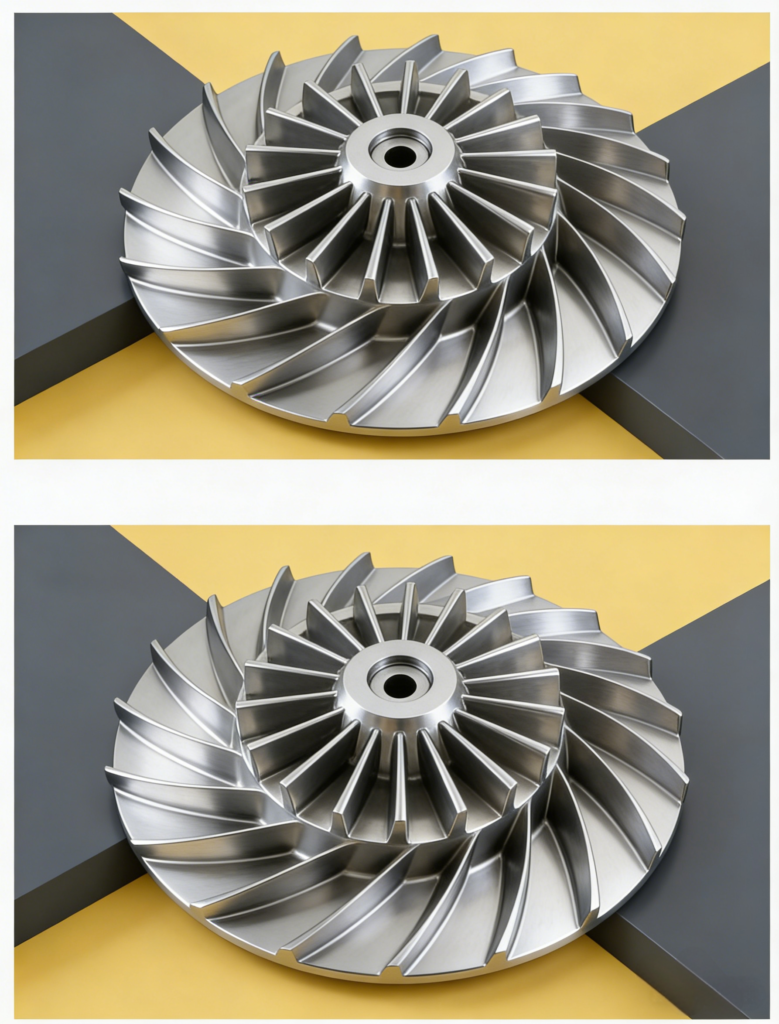
CNC Machining from Billet: Solid aluminum or titanium bar stock is machined using multi axis CNC equipment to create the impeller. Achieves superior dimensional accuracy and surface finish. Allows complex blade geometries not possible with casting. Preferred for custom and high performance impellers.
5 Axis CNC Machining: Advanced machining using five simultaneous axes of motion enables complex undercut blade profiles and optimized aerodynamic shapes. Essential for producing high efficiency, custom impeller designs.
Precision Balancing: All impellers must be dynamically balanced to very tight tolerances. High speed balancing verifies performance at operational RPM. Proper balancing prevents bearing wear and turbocharger failure.
Types of Turbocharger Impellers:
To optimize for SEO and help users find the right product, it is important to categorize the different types available:
Standard Trim Impeller: Balanced design for general purpose applications. Suitable for most original equipment and mild performance upgrades.
High Flow Impeller: Optimized for maximum airflow at moderate pressure ratios. Ideal for engines requiring high volume airflow without extreme boost pressure.
High Pressure Impeller: Designed to generate higher boost pressure at lower flow rates. Suitable for smaller engines or applications requiring high manifold pressure.
Extended Tip Impeller:
Features longer blade tips for improved efficiency across the compressor map. Provides broader power band and better transient response.
Billet Impeller: Machined from solid bar stock rather than cast. Offers superior strength, precision, and blade profile optimization. Preferred for high performance and racing applications.
Custom Turbocharger Impeller: Engineered to exact specifications including unique blade counts, inducer/exducer diameters, trim ratios, and materials.
Key Applications Across Industries:
The versatility of the turbocharger impeller makes it essential across numerous engine applications:
Automotive: Passenger cars use turbocharger impellers to downsize engines while maintaining power output. Performance vehicles demand high flow impellers for maximum horsepower. Diesel trucks require durable impellers for sustained high load operation.
Racing and Motorsport: Race engines push impellers to extreme RPM limits. Billet aluminum or titanium impellers provide required strength and reliability. Custom impeller designs optimize airflow for specific racing applications.
Marine: Boat engines operate under continuous high load conditions. Corrosion resistant materials are essential for saltwater environments.
Industrial: Generator sets, compressors, and pumps use turbochargers for efficiency improvement. Industrial impellers prioritize durability and long service life.
Aerospace: Aircraft piston engines use turbochargers for high altitude performance. Aerospace impellers demand maximum reliability and material traceability.
How to Select the Right Turbocharger Impeller:
Choosing the appropriate turbocharger impeller requires careful consideration of several factors:
Inducer Diameter: Larger inducers flow more air but may sacrifice low end response. Match to engine displacement and airflow requirements.
Exducer Diameter: Larger exducers generate higher pressure ratios. Balance with inducer size based on desired boost pressure.
Trim Ratio: Lower trim (50 60) favors low end response. Higher trim (65 75) favors top end flow. Select based on engine operating range.
Blade Count: More blades provide better low end response. Fewer blades reduce parasitic drag at high RPM.
Material: Cast aluminum for daily drivers, forged aluminum for performance, titanium for extreme racing applications.
Balance Grade: Specify balance tolerance based on maximum operating RPM. Tighter balance extends turbocharger bearing life.
Customization Needs: For unique engine combinations, custom impellers can be engineered to specific airflow and pressure requirements.
Customization Capabilities:
For applications requiring unique specifications, custom turbocharger impellers offer tailored solutions. Customization options include:
Inducer and Exducer Diameters: Specific sizes to match unique compressor housing and airflow requirements.
Blade Count and Geometry: Custom blade profiles optimized for specific engine operating characteristics.
Trim Ratio: Precise trim calculation for desired flow versus pressure balance.
Material Selection: Cast aluminum, forged aluminum, billet aluminum, or titanium.
Surface Treatment: Anodizing, anti friction coating, or polishing for improved flow.
Balance Tolerance: Precision balancing to ultra tight specifications for high RPM operation.
Installation and Maintenance Best Practices:
Proper installation and maintenance ensure the turbocharger impeller performs reliably:
Clean Air Supply: Ensure clean air filter and intake piping. Contaminants will erode impeller blades and reduce performance.
Verify Balance: Replace any impeller that shows signs of imbalance or blade damage.
Inspect for Damage: Check impeller blades for bending, cracking, or erosion during routine maintenance.
Use Proper Torque: Follow manufacturer specifications for compressor wheel retaining nut torque.
Allow Cool Down: After hard operation, allow turbocharger to cool with engine idling to prevent oil coking.
Common Failure Modes:
Understanding potential issues helps with preventive maintenance:
Blade Erosion: Caused by ingested dirt or debris. Results in reduced efficiency and potential imbalance.
Fatigue Cracking: High cycle fatigue from extreme RPM or vibration. More common in cast impellers than billet.
Over speed Damage: Excessive rotational speed beyond material limits. Causes blade stretching or catastrophic failure.
Foreign Object Damage: Ingestion of loose hardware or debris destroys impeller blades.
Future Trends:
The turbocharger impeller continues to evolve with technology advances:
Additive Manufacturing: 3D printed impellers enable complex internal cooling passages and optimized aerodynamics.
Advanced Materials: New aluminum and titanium alloys offer higher strength at elevated temperatures.
Variable Geometry: Electronically controlled variable trim impellers for optimized performance across all engine speeds.
Integrated Electric Assist: Electrically assisted turbochargers with impellers driven by both exhaust and electric power.
Conclusion:
The turbocharger impeller may appear to be a simple component, but its role in forced induction performance is profound. By compressing intake air efficiently at extremely high rotational speeds, this precision engineered component enables smaller engines to produce more power with better fuel economy and lower emissions.
By understanding the materials, design parameters, and selection criteria outlined in this guide, you can confidently choose the right turbocharger impeller for your application—whether a standard replacement part or a custom engineered design for maximum performance.