High Quality 7.2 oz CNC Aluminium Machining Fly Fishing Reel For Fly Fishing
Request a Quote
Enter the quantity you need and add to your quote list for pricing inquiries.
Product Details
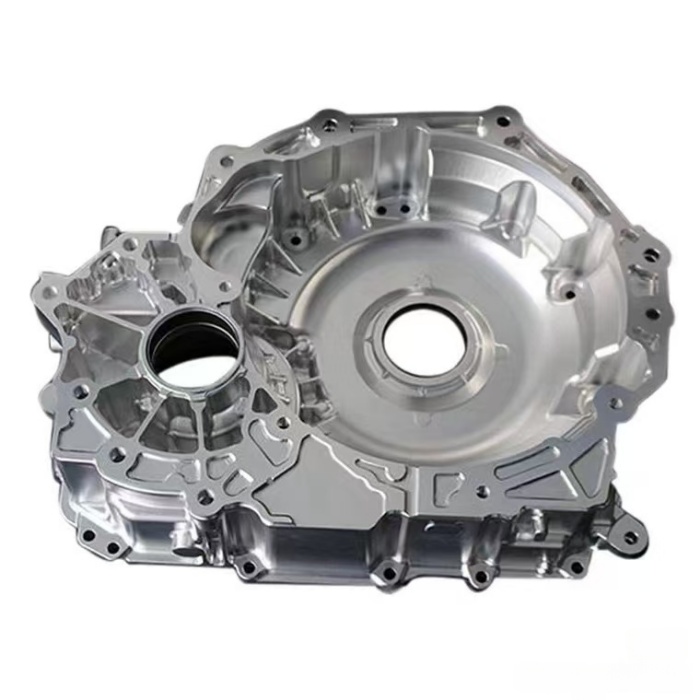
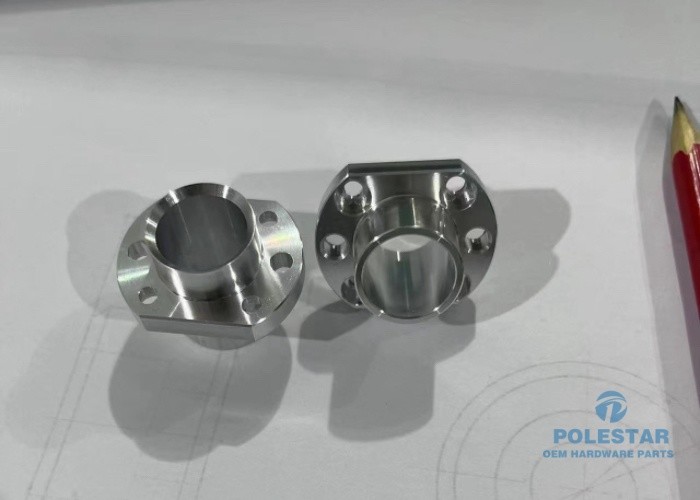
CNC aluminium machining offers significant advantages over other manufacturing processes due to aluminium’s excellent machinability, thermal conductivity, and natural corrosion resistance. The process begins with a CAD model converted to G-code, which directs spindle speeds, feed rates, tool paths, and depth of cuts. CNC aluminium machining achieves tolerances as tight as ±0.005 mm with surface finishes down to Ra 0.4 µm.
Modern CNC aluminium maching centers feature spindle speeds up to 15,000-30,000 RPM, rapid traverse rates exceeding 30 m/min, and automatic tool changers with 40-100 tool positions. High-speed machining techniques—including trochoidal milling and high-efficiency machining—enable material removal rates up to 200 cm³/min for aluminium 6061. Cycle times for CNC aluminium machining range from 2 minutes for simple parts to 30+ minutes for complex, multi-axis components. The process accommodates part sizes from miniature components under 5 mm up to large structural parts exceeding 2,000 mm in length.
CNC aluminium machining supports both prototyping (1-50 units) and production volumes (100-50,000+ units), with cost per unit decreasing significantly at higher volumes due to automated fixturing and reduced setup time.
What is CNC Aluminium Machining?
CNC aluminium machining is a precision subtractive manufacturing process in which computer-controlled equipment removes material from aluminum workpieces to create complex, tight-tolerance components. This process utilizes CNC milling machines, CNC lathes, and multi-axis machining centers to produce parts with exceptional dimensional accuracy, surface finish, and mechanical properties. CNC aluminium machining is the preferred method for industries requiring lightweight, corrosion-resistant components with high strength-to-weight ratios, including aerospace, automotive, electronics, and industrial automation.
Product Details of CNC Aluminium Machining:
| Attribute | Description |
| Material | 6061/7075 aluminium alloy, Lightweight, Strong, Corrosion-proof |
| Process | CNC precision-machined, ±0.03mm tolerance, Mirror-smooth finish |
| Surface | Hard-anodized, Multi-color, Wear-resistant |
| Design | Custom spool, Ergonomic handle, Fly-optimized |
| Function | Silky drag, Fast retrieval, Pinpoint accuracy |
| Compatibility | Fits a wide range of fly fishing lines and rods |
| Durability | Harsh-tested, High-cycle rated |
| Quality | ISO-compliant, Zero-defect protocol |
| Advantages | Feather-light, Razor-precise, Bulletproof, Beautiful |
Key Features of CNC Aluminium Machining:
Aerospace-Grade Construction:
Machined from 6061-T6 or 7075-T6 aluminium alloys, achieving exceptional strength-to-weight performance, corrosion resistance, and extended service life.
Precision Manufacturing:
Computer-controlled milling maintains flawless tolerances across all components, ensuring smooth drag operation and optimal gear mesh alignment.
Ergonomic Design:
Mass-reduced architecture minimizes caster fatigue during extended sessions while preserving structural robustness for demanding fish handling.
Protective Surface Treatment:
Type III hard anodization delivers supplemental corrosion protection with color options including matte black, gunmetal, and olive drab.
Marine Environment Compatibility:
Stainless steel hardware and sealed bearing configurations (where specified) provide saltwater corrosion resistance.
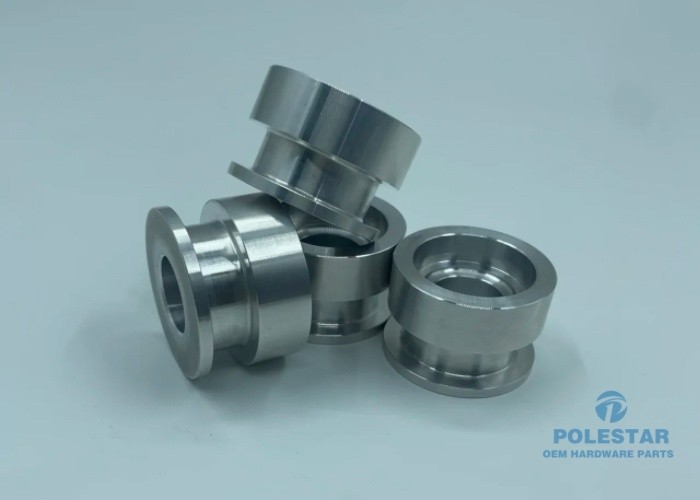
Primary Applications of CNC Aluminium Machining:
Aerospace: CNC aluminium machining produces aircraft structural components including wing ribs, fuselage frames, bulkheads, and engine mounts. Aluminum 7075 and 2024 are preferred for their high strength-to-weight ratio. Tolerances typically ±0.05 mm with AS9100 certification.
Automotive: CNC aluminum machining creates engine components, transmission housings, suspension arms, and custom performance parts. 6061-T6 and 6082 are common. High-volume CNC aluminum machining achieves cycle times under 60 seconds for simple components.
Electronics: CNC aluminum machining manufactures heat sinks, enclosures, EMI shields, and precision housings. 6063 and 5052 offer excellent thermal conductivity (167-200 W/m·K) and cosmetic finishes. Surface finishes Ra 0.8-1.6 µm typical.
Industrial Machinery: CNC aluminum machining produces robotic arms, fixture tooling, hydraulic manifolds, and machine frames. 6061-T6 is standard for jigs and fixtures requiring dimensional stability. Tolerances ±0.05 mm for precision assemblies.
Medical Devices: CNC aluminum machining creates surgical instrument handles, imaging equipment components, and prosthetic parts. 6061 and 7075 alloys with anodized or passivated finishes for biocompatibility and sterilization resistance.
Consumer Products: CNC aluminum machining manufactures bicycle frames, camera bodies, smartphone housings, and luxury goods. 6063 and 5052 provide excellent cosmetic anodizing response and surface finish.