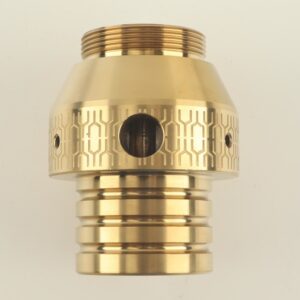
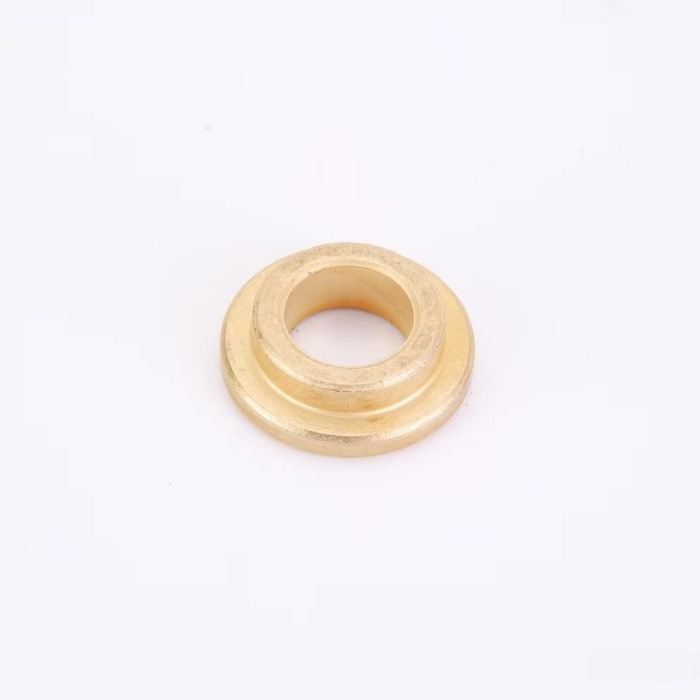
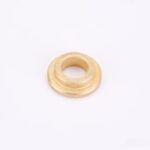
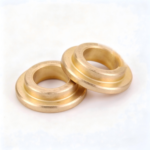
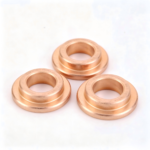
Corrosion Resistant High Stable Brass Bushing Bearing 1.5mm Thickness Thin Wall Bearing
Request a Quote
Enter the quantity you need and add to your quote list for pricing inquiries.
Product Details
A brass bushing bearing is a cylindrical sleeve bearing made from brass or bronze alloys, designed to support rotating or sliding shafts while reducing friction and wear. It provides reliable performance in low-speed, high-load applications. Manufactured from C93200, C95400, C36000, or oil-impregnated bronze. Available in custom inner diameters from 3mm to 100mm, outer diameters from 5mm to 120mm, and lengths from 5mm to 80mm. Features include self-lubricating options, graphite plugs, flanged designs, and grooves for oil distribution. Suitable for agricultural equipment, industrial machinery, automotive components, pumps, and conveyors. Custom bushings available with specific tolerances and material grades.
What Is a Brass Bushing Bearing?
A brass bushing bearing is a cylindrical sleeve bearing that uses a sliding contact between the bushing inner diameter and the shaft. Unlike rolling element bearings that use balls or rollers, it relies on a thin film of lubricant to reduce friction and wear. This simple, rugged design offers high load capacity, shock resistance, and tolerance to contamination.
It is characterized by its cylindrical shape, precise inner and outer diameters, and optional features. Typical features include a precision machined inner diameter for shaft fit, an outer diameter for housing fit, chamfered edges for easy installation, lubrication grooves or holes for oil distribution, optional flange for axial location, and graphite plugs for self-lubrication. Inner diameters typically range from 3mm to 100mm, with outer diameters from 5mm to 120mm and lengths from 5mm to 80mm. It is cost-effective, easy to install, and capable of handling high shock loads.
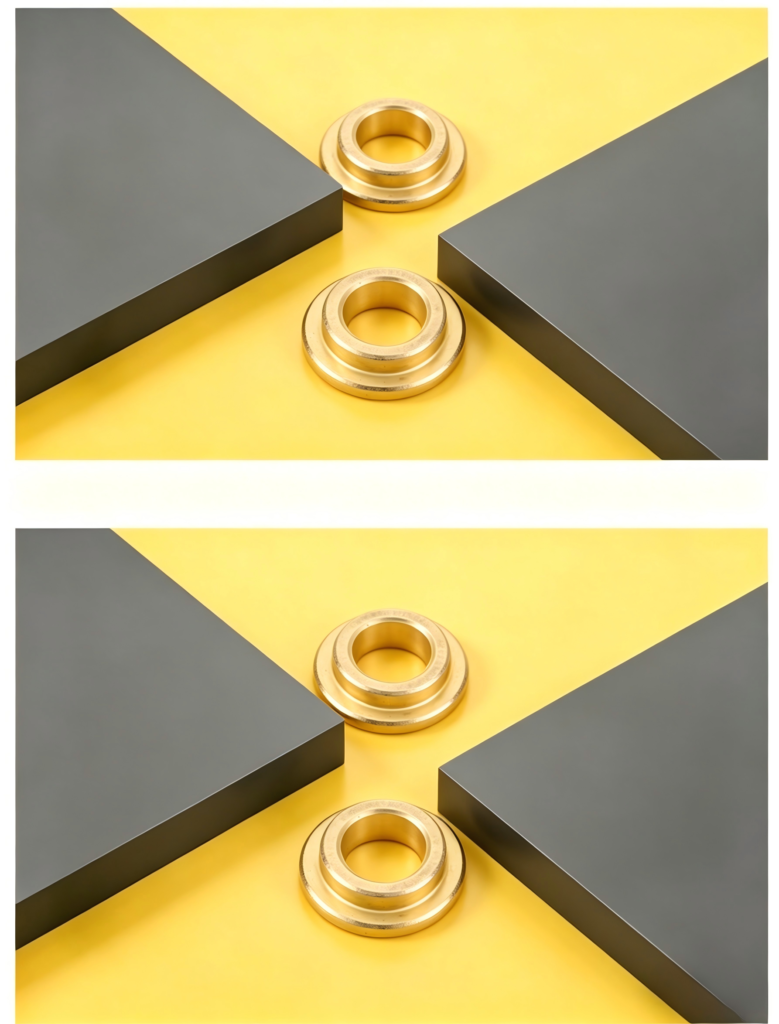
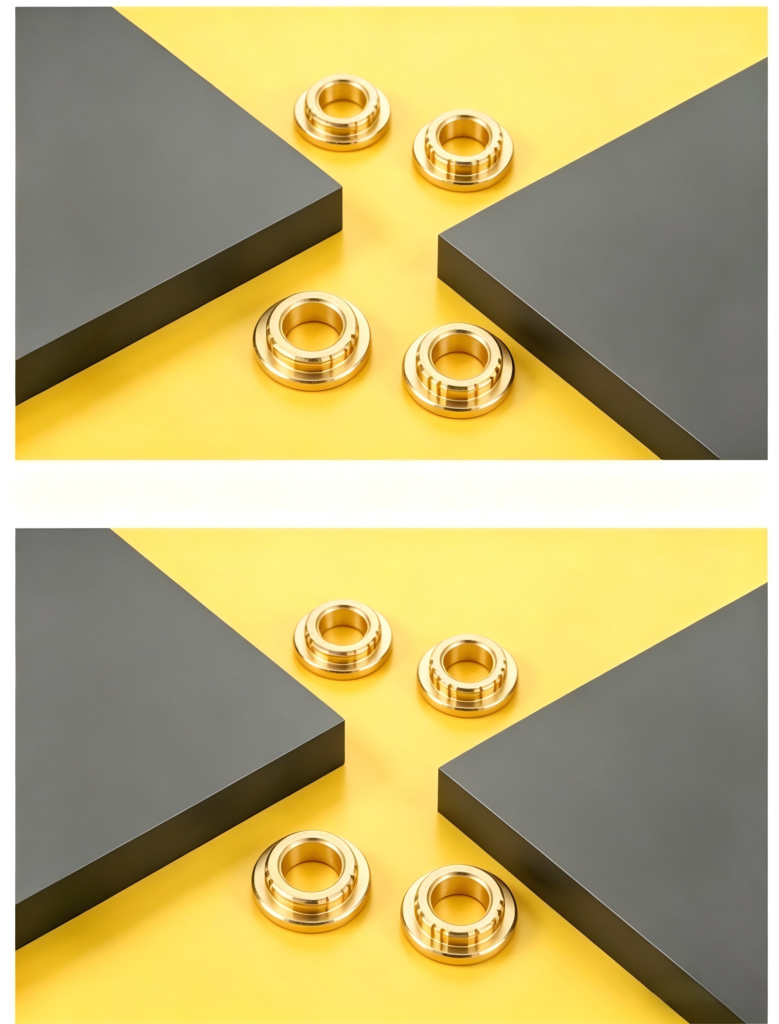
Common Materials for Brass Bushing Bearing:
C93200 (SAE 660) Bronze is the most common material for brass bushing bearing production. It offers excellent wear resistance, good corrosion resistance, and high load capacity. Suitable for general industrial applications, agricultural equipment, and heavy machinery.
C95400 Aluminum Bronze provides higher strength and excellent wear resistance. Offers good corrosion resistance in marine environments. Suitable for high-load, low-speed applications and underwater equipment.
C36000 Free Cutting Brass offers excellent machinability for precision components. Good corrosion resistance. Suitable for light to medium duty applications and precision instruments.
Oil Impregnated Bronze is a porous bronze material impregnated with oil for self-lubrication. Provides maintenance-free operation in many applications. Suitable for applications where regular lubrication is difficult.
Graphite Plugged Bronze features graphite plugs embedded in the bearing surface for dry-running applications. Suitable for high-temperature or food processing environments where oil cannot be used.
Types of Brass Bushing Bearing:
Cylindrical Brass Bushing Bearing:
A simple straight cylindrical sleeve. Most common configuration for general purpose applications. Suitable for shafts in housings, pivot points, and guide pins.
Flanged Brass Bushing Bearing:
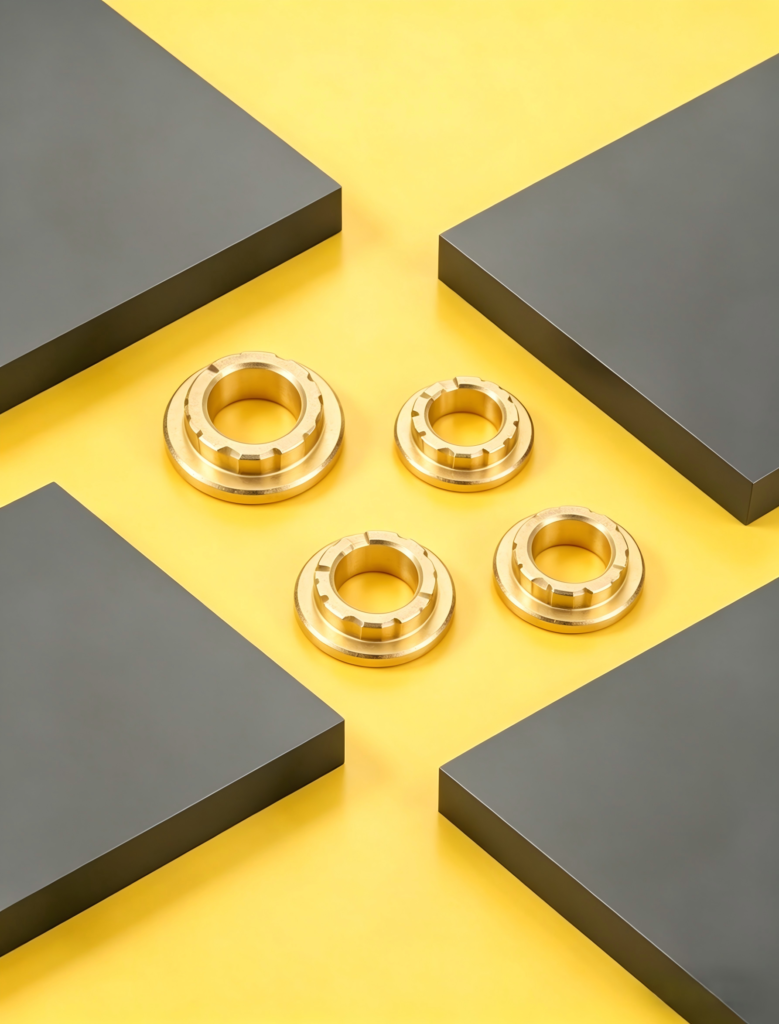
Features an integral flange at one end for axial positioning. Eliminates need for separate thrust washers. Suitable for applications with axial loads.
Grooved Brass Bushing Bearing:
Features lubrication grooves or spiral channels on the inner diameter. Provides oil distribution along the bearing surface. Suitable for applications requiring frequent lubrication.
Self Lubricating Brass Bushing Bearing:
Oil-impregnated or graphite-plugged design. Requires no external lubrication. Suitable for hard-to-reach or maintenance-free applications.
Split Brass Bushing Bearing:
Features a longitudinal split for installation without shaft removal. Suitable for repair applications where shaft disassembly is impractical.
Applications Across Industries:
Agricultural Equipment:
Brass bushing bearing is used in tractors, harvesters, planters, and hay balers for pivot points, linkage connections, and implement attachments. High load capacity and tolerance to dirt are essential.
Industrial Machinery:
Brass bushing bearing supports shafts in conveyors, packaging equipment, printing presses, and textile machinery. Cost-effective and easy to replace.
Automotive:
Brass bushing bearing is found in suspension components, steering linkages, pedal assemblies, and door hinges. Provides quiet, reliable operation.
Pumps and Compressors:
Brass bushing bearing supports pump shafts and connecting rods. Corrosion-resistant materials suit water and chemical pumps.
Marine Equipment:
Brass bushing bearing in boat steering systems, deck hardware, and propeller shafts require corrosion-resistant aluminum bronze.
Food Processing:
Brass bushing bearing with graphite plugs provides dry-running operation where oil contamination is prohibited.
Excellent Case: Agricultural Tractor Linkage
Background: A tractor manufacturer experienced premature wear on steel pivot bushings in the three-point hitch linkage. Dirt and moisture caused rapid failure every 500 hours.
Solution: A brass bushing bearing was selected using C93200 bronze with graphite plugs. The bushing featured a 25mm inner diameter, 32mm outer diameter, and 30mm length.
Results:
- Service Life: Extended from 500 hours to 3,000 hours
- Wear Resistance: 70 percent reduction in inner diameter wear
- Contamination Tolerance: Graphite plugs maintained lubrication despite dirt
- Maintenance: Reduced greasing frequency from daily to weekly
- Cost: Lower replacement cost than steel bushings
This case demonstrates how the brass bushing bearing provides superior wear resistance in contaminated agricultural environments.
How to Select the Right Brass Bushing Bearing:
Choosing the appropriate brass bushing bearing requires careful consideration of several factors. Shaft diameter determines the inner diameter of the bushing, requiring proper clearance for operation. Housing bore determines the outer diameter fit, typically requiring press fit or slip fit. Load requirements determine material selection, with C95400 for high loads and C93200 for general use. Speed affects lubrication needs, with higher speeds requiring better oil distribution. Environmental conditions determine corrosion protection requirements. Lubrication method determines whether grooved, oil-impregnated, or graphite-plugged design is needed.
Installation Best Practices:
Proper installation ensures the brass bushing bearing performs reliably. Clean the housing bore thoroughly before installation. Press the bushing into the housing using tools that apply force to the outer diameter only. Never strike the bushing directly with a hammer. For split bushings, position the split away from the primary load direction. Apply lubricant before shaft insertion. Verify shaft rotates freely after installation.
Maintenance and Care:
Regular maintenance extends brass bushing bearing life. Lubricate grooved bushings at recommended intervals. For oil-impregnated bushings, re-impregnate after cleaning. Inspect for wear by measuring inner diameter. Replace bushings when clearance exceeds 0.1mm per 25mm of shaft diameter. Keep dirt and debris away from bearing area.
Conclusion:
The brass bushing bearing represents a cost-effective, reliable solution for supporting rotating and sliding shafts in low-speed, high-load applications. By providing high load capacity, shock resistance, and tolerance to contamination, it outperforms rolling element bearings in many industrial environments. By understanding the materials, types, and selection criteria outlined in this guide, the right brass bushing bearing can be selected for any application—from agricultural equipment to industrial machinery.