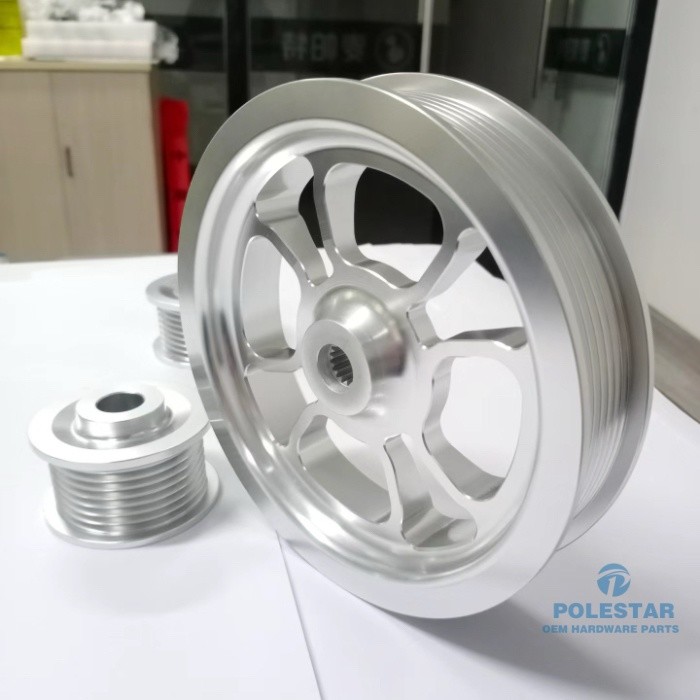
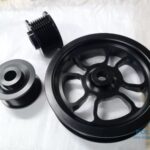
Heavy Duty Aluminum Wheel Hub Forged Alloy 5 Axis CNC Machined with Colorful Finish for Car
Request a Quote
Enter the quantity you need and add to your quote list for pricing inquiries.
Product Details
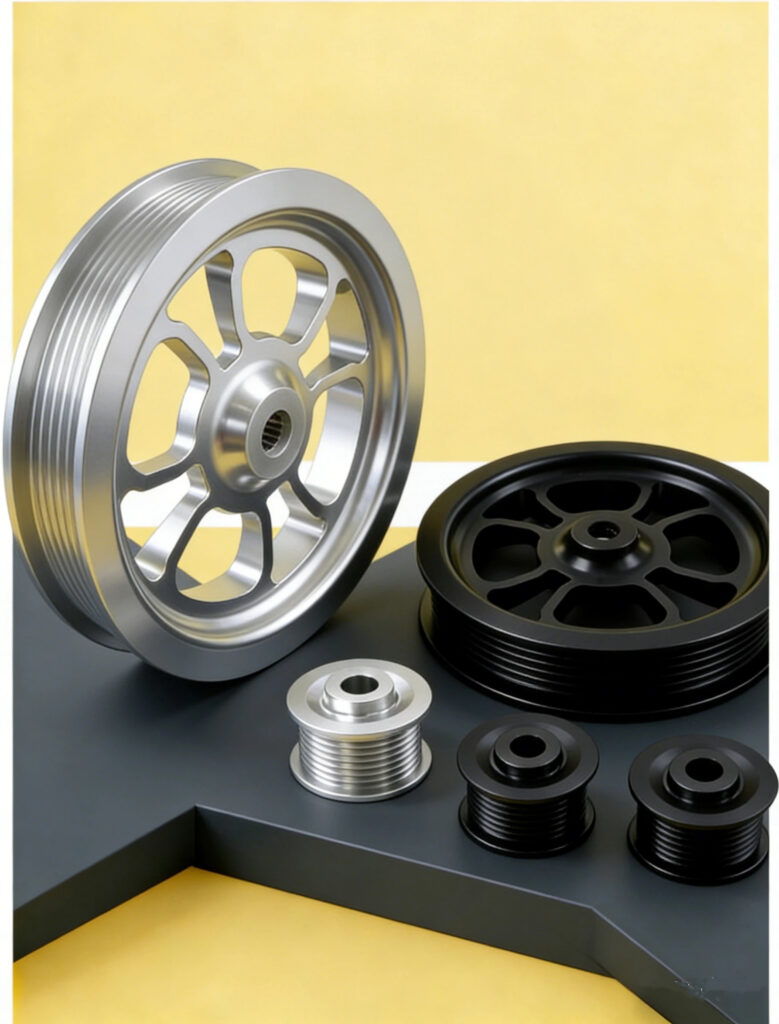
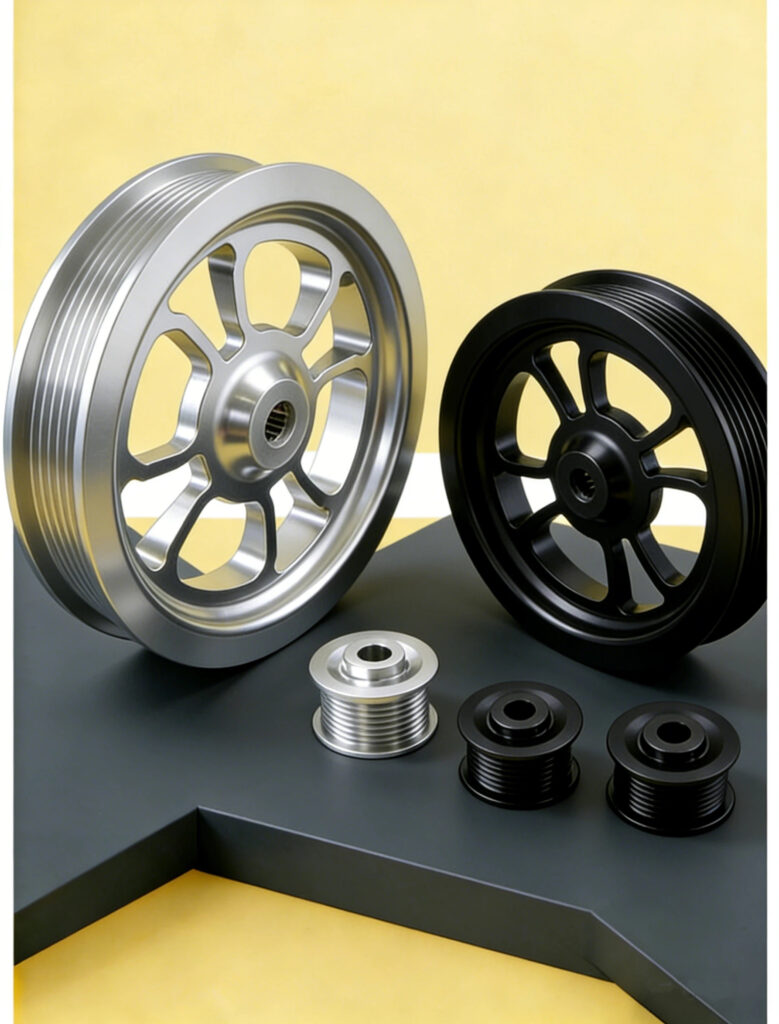
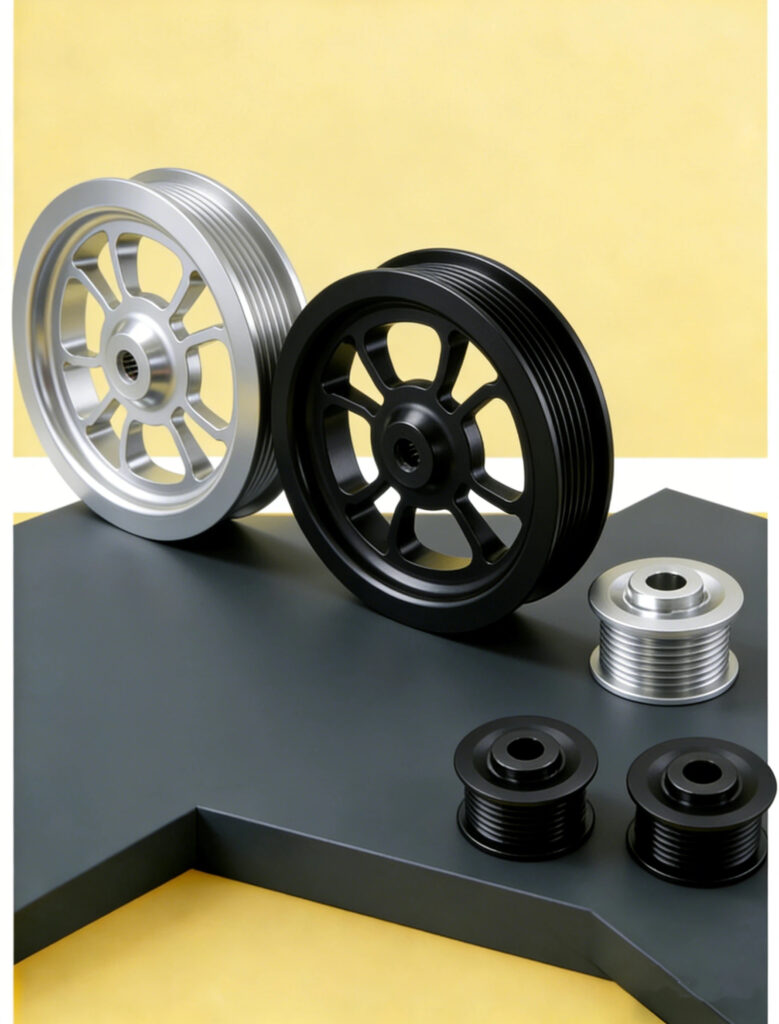
Aluminum wheel hubs are lightweight, high-strength components that mount wheels to vehicle axles. Aluminum wheel hubs reduce unsprung mass, improve fuel efficiency, and enhance heat dissipation compared to steel hubs. Common in automotive, motorsports, and commercial trucking applications.
What is an Aluminum Wheel Hub?
An aluminum wheel hub is a precision-machined component that connects a vehicle’s wheel to the axle assembly, supporting the wheel bearing and enabling rotation. Unlike traditional cast iron or forged steel hubs, aluminum wheel hubs offer significant weight savings—typically 40-60% lighter—reducing unsprung mass and improving suspension response, braking performance, and fuel economy.
The aluminum wheel hub includes mounting surfaces for the wheel (lug studs or bolt holes), bearing bore (tapered roller or hub unit bearing), and often integral flange for brake rotor mounting. Most aluminum wheel hubs are forged (6061-T6 or 6082-T6) for high strength and fatigue resistance, though some applications use gravity or low-pressure cast A356 aluminum (heat-treated to T6 temper). Load ratings vary: passenger car hubs typically support 500-800 kg per corner; heavy-duty truck hubs up to 3,000+ kg. Aluminum wheel hubs also provide superior thermal conductivity (167 W/m·K vs. 45 W/m·K for steel), dissipating brake heat faster and reducing rotor warping.
Material Specifications:
- 6061-T6 Aluminum (Forged): Most common for passenger car and light truck aftermarket hubs. Forging eliminates porosity, achieves fine grain structure. Tensile strength 310 MPa, yield 276 MPa. Elongation 12-17%. Excellent machinability and corrosion resistance. Heat-treated to T6 temper (solution heat-treated and artificially aged).
- 6082-T6 Aluminum (Forged): European standard equivalent to 6061. Higher strength (tensile 310-340 MPa). Excellent for high-load applications. Preferred in commercial vehicle and motorsports hubs.
- A356 Aluminum (Cast + T6): Gravity or low-pressure die cast. Lower strength than forged (tensile 230-250 MPa, yield 165-185 MPa). Lower cost for high-volume OEM production. May contain porosity; requires X-ray inspection for critical applications.
- 7075-T6 Aluminum (Forged): High-strength aluminum (tensile 572 MPa, yield 503 MPa). Used in racing, aerospace, and extreme-duty applications. Lower corrosion resistance than 6061; requires protective coating. Higher cost.
- 2014 Aluminum (Forged): High-strength, good machinability. Used in heavy-truck hubs. Tensile 480 MPa. Lower corrosion resistance; requires coating.
- 6066 Aluminum (Extruded then forged): Higher strength than 6061. Used in commercial vehicle hubs. Tensile 345 MPa. Good machinability.
Surface Finishes:
- As-Machined (Clear or Bright): Standard finish after CNC turning/milling. Visible tool marks; Ra 1.6-3.2 µm. Lowest cost. Suitable for non-cosmetic applications (commercial trucks, off-road).
- Clear Anodized (Type II): Electrochemical oxide layer, 5-15 µm thickness. Transparent finish; maintains aluminum appearance. Enhances corrosion and abrasion resistance. Common for aftermarket passenger car hubs.
- Black Anodized (Type II): Similar thickness, black dye. Cosmetic; corrosion resistant. Popular in motorsports and custom automotive.
- Hardcoat Anodized (Type III): Thicker oxide layer (25-75 µm); hardness 65-70 HRC. Maximum wear and corrosion resistance. Used in heavy-duty, off-road, and military hubs. Dark gray/green appearance.
- Powder Coated (Black, Silver, Custom RAL): Electrostatic polymer coating, 60-120 µm thickness. Durable; hides surface imperfections. Wide color range. Heavier than anodizing. Common for off-road and commercial hubs.
- Chrome Plated (Decorative): Electroplated nickel + chrome, 25-50 µm. High-gloss reflective finish. Corrosion-resistant. Heavy and expensive. Used in show cars and vintage restorations.
- Ceramic Coated: Sprayed ceramic thermal barrier. Reduces heat transfer to hub and bearing (used in racing). Dark gray/black matte finish. Improves bearing life in high-brake-temperature applications.
- Passivated (for aluminum): Chromate conversion coating (chem film). 0.5-2 µm. Conductive; corrosion protection for electrical grounding applications (sensors, ABS tone rings).
Applications:
- Passenger Cars (OEM & Aftermarket): Forged 6061-T6 or cast A356-T6 hubs. Weight reduction 2-4 kg per corner vs. steel. Improves fuel economy 2-5% and reduces stopping distance 3-7%. Standard clear or black anodized finish.
- Light Trucks & SUVs: Forged 6061 or 6082 hubs. Higher load rating (800-1,200 kg per corner). Hardcoat anodized or powder coated for corrosion resistance (road salt exposure). Often include integral ABS tone ring.
- Motorsports & Racing: Forged 7075-T6 hubs (highest strength). Weight reduction critical (unsprung mass). Hardcoat anodized (Type III) for wear resistance. Often include integrated wheel studs (instead of pressed-in studs) for reliability.
- Commercial Trucks & Trailers: Forged 6061 or 6066 hubs. Load ratings 2,000-3,500+ kg per corner. Hardcoat anodized or powder coated. Replaceable steel wear sleeves for bearing journals. TPMS and ABS sensor provisions.
- Off-Road & Military: Forged 6061 or 7075 hubs. Extreme impact and corrosion resistance. Hardcoat anodized (50-75 µm) or ceramic coated. Often include integrated beadlock mounting provisions.
- Heavy Equipment (Mining, Construction): Large forged or cast aluminum hubs for wheel loaders, haul trucks. Corrosion-resistant for wet/muddy conditions. Powder coated for durability.
- Motorcycles & Powersports: Forged 6061 or 7075 hubs. Weight reduction critical for handling. Anodized (black, gold, blue) for cosmetic and corrosion resistance.
Best Practice Application Example:
Scenario: Steel to aluminum wheel hub conversion for commercial delivery van fleet.
A regional delivery fleet operating 120 Mercedes-Benz Sprinter vans (3,500 kg GVWR) experienced frequent brake rotor warping and premature wheel bearing failures. Each van averaged 80,000 km annually in stop-start urban delivery. OEM steel hubs (8.4 kg each) retained heat from repeated braking, causing rotor temperatures to exceed 450°C. Rotor warping occurred every 25,000 km; bearing grease degradation required repacking every 40,000 km. Average annual maintenance cost per van: $1,200. Fleet manager sought solution to reduce brake temperatures and extend service intervals.
Selected Solution:
- Hub Material: Forged 6061-T6 aluminum (vs. OEM cast steel). Weight 3.9 kg (4.5 kg savings per corner, 18 kg total per van).
- Surface Finish: Type III hardcoat anodized (50 µm, black). Hardness 65 HRC for wear resistance at bearing journal and lug seat surfaces.
- Design: Retained OEM wheel studs (M14 x 1.5) and bearing interface (tapered roller bearing set). Added integral cooling vanes (6 vanes, 8 mm height) on hub face behind rotor to pump air across rotor surface.
- Installation: Direct replacement for OEM steel hub. Torque hub nut to 220 Nm (same as steel). Retorque after 100 km.
- Testing: Brake rotor temperature measured with infrared pyrometer at rotor hat (hub-rotor interface). Bearing temperature measured with contact probe on outer race.
Results:
- Brake rotor temperature: Reduced from 450°C to 310°C at rotor hat (31% reduction). Aluminum’s thermal conductivity (167 vs. 45 W/m·K) plus cooling vanes drew heat away from rotor.
- Rotor life: Extended from 25,000 km to 70,000 km (180% improvement). Rotor warping eliminated; replacements now due to minimum thickness only.
- Bearing life: Wheel bearing service interval extended from 40,000 km to 160,000 km (300% improvement). Lower operating temperature preserved grease (dropped from 180°C to 110°C at bearing).
- Unsprung mass: Reduced 18 kg per van (from 33.6 kg steel hubs to 15.6 kg aluminum). Improved ride quality and suspension component life.
- Fuel economy: Improved 4.2% in stop-start cycle (verified over 50,000 km).
- Weight savings per axle: 9 kg per axle × 2 axles = 18 kg per van × 120 vans = 2,160 kg total fleet unsprung mass reduction.
- Maintenance savings: $820 per van annually ($98,400 fleet-wide) in reduced rotor and bearing replacement labor/parts.
- Aluminum wheel hubs cost: $185 each × 4 per van × 120 vans = $88,800 investment.
- ROI: Achieved within 13 months via maintenance savings alone (fuel savings additional).
Product Advantages:
- Weight reduction: 40-60% aluminum wheel hubs lighter than steel hubs (4.5-5.5 kg savings per corner typical)
- Thermal management: 3.7× higher thermal conductivity (167 vs. 45 W/m·K) dissipates brake heat; reduces rotor warping and bearing temperatures
- Corrosion resistance: Anodized or powder coated aluminum withstands road salt, moisture, chemicals
- Strength & durability: Forged 6061-T6 provides tensile strength 310 MPa, comparable to cast steel; 7075-T6 exceeds steel (572 MPa)
- Fatigue life: Forged aluminum wheel hubs achieve 10+ million cycles (SAE J328 testing)
- Precision: CNC-machined bearing bores to H7 tolerance, lug holes to ±0.1 mm position
- Fuel economy: Reduced unsprung mass improves efficiency 2-5% in stop-start driving
Why Choose Us?
- Forged 6061-T6 and 7075-T6 aluminum wheel hubs (CNC machined in-house)
- ISO 9001:2015 and IATF 16949 certified (automotive quality)
- In-house hardcoat anodizing (Type III) and powder coating
- SAE J328 fatigue testing (vertical bending, cornering, radial fatigue)
- CMM inspection for bearing bore and lug hole tolerances
- Custom aluminum wheel hub designs for passenger car, light truck, motorsports, commercial vehicle