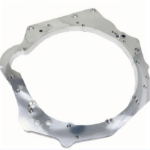
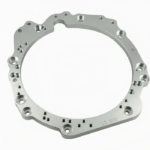
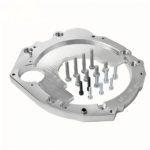
OEM Custom Superior Adapter Plate for Gearbox 9mm Thickness Aluminum Alloy Custom Offset and Step
Request a Quote
Enter the quantity you need and add to your quote list for pricing inquiries.
Description
Discover everything about adapter plate for gearbox including types, materials, manufacturing processes, and selection criteria. Learn how to choose the right adapter plate for engine-to-gearbox conversions, industrial power transmission, and custom vehicle builds.
What Is an Adapter Plate for Gearbox?
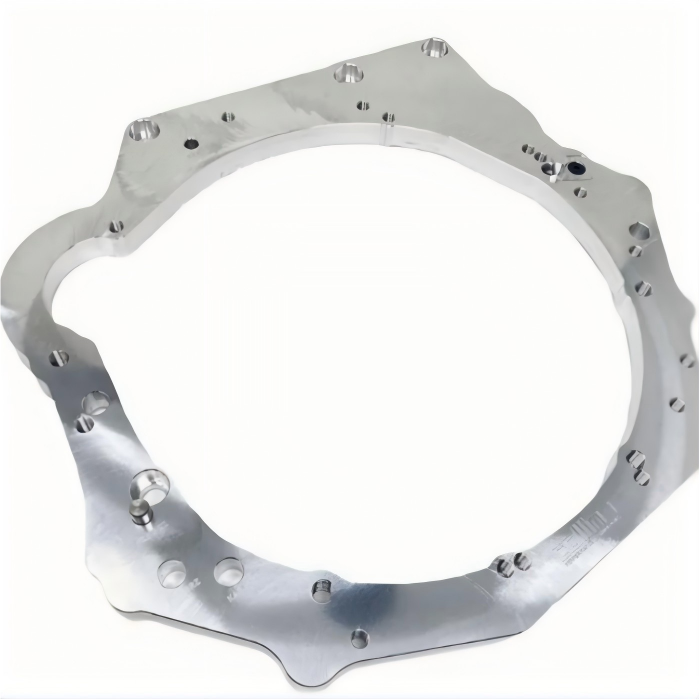
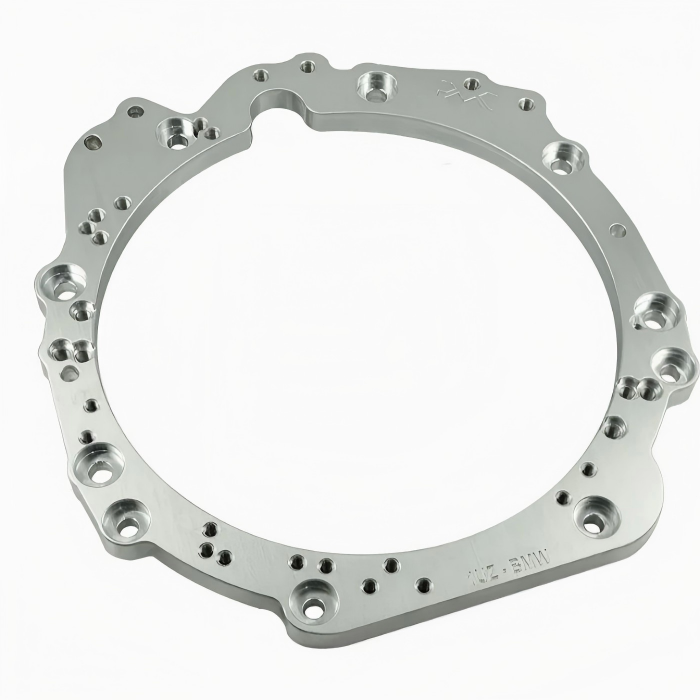
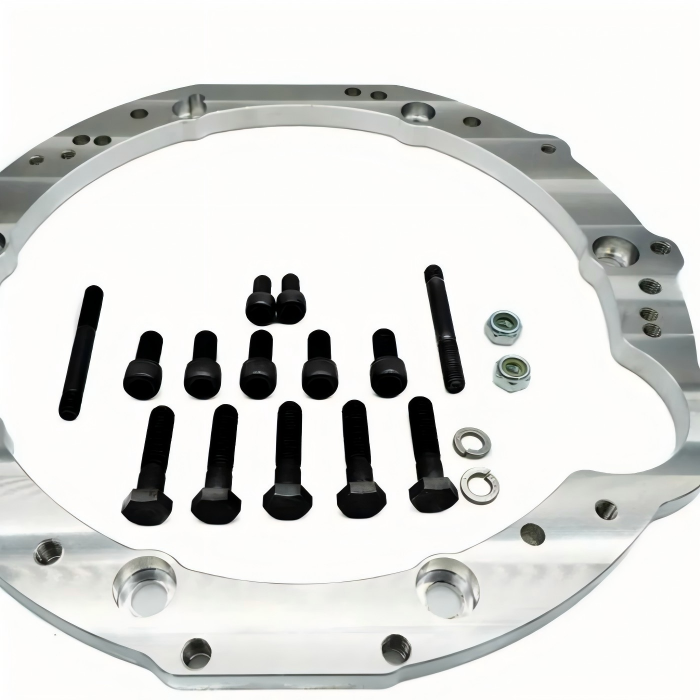
An adapter plate for gearbox is a flat or stepped metal plate that mounts between an engine or motor and a gearbox, compensating for differences in bolt patterns, pilot bore diameters, and mounting surface offsets. The adapter plate for gearbox allows components from different manufacturers to be bolted together without modifying the original housings. It is commonly used in engine swaps (e.g., mating a Chevrolet engine to a Ford transmission), industrial motor-to-gearbox connections, and custom machinery builds.
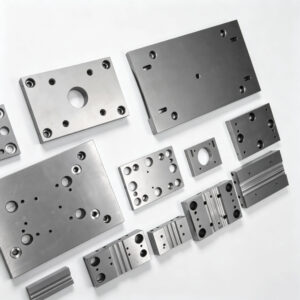
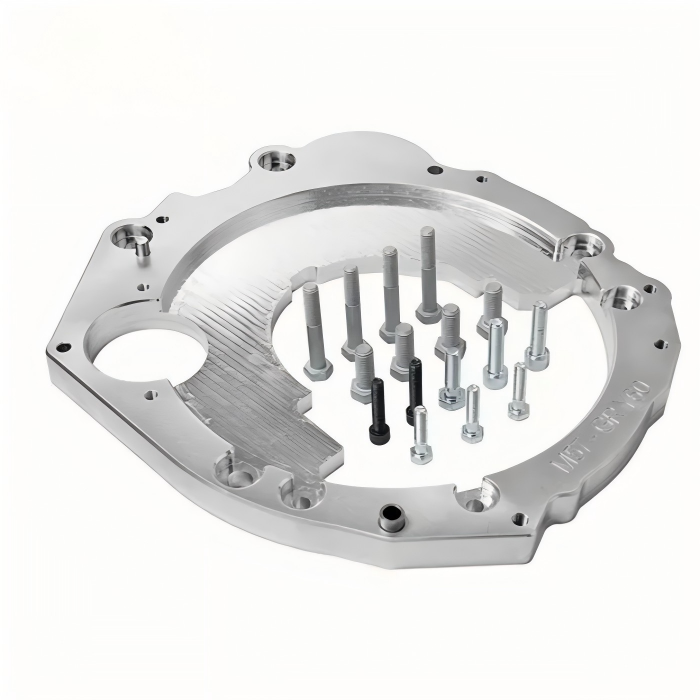
The adapter plate for gearbox is characterized by its precisely drilled bolt holes that match both the engine and gearbox patterns, a pilot bore that centers the input shaft, and often a step or counterbore to achieve proper crankshaft-to-input shaft alignment. Typical features include a thickness that sets the correct input shaft engagement depth, recesses for bolt heads or protruding features, alignment dowel holes for repeatable positioning, and corrosion-resistant coatings. Thicknesses typically range from 1/4 inch to 1 inch (6mm to 25mm), depending on the application and torque requirements.
Manufacturing Process:
The production of an adapter plate for gearbox follows several methods depending on volume and precision requirements. For custom one-off applications, the plate is CNC machined from solid steel or aluminum plate. This method offers the highest precision and allows for complex features like stepped profiles and recessed bolt holes. For small production runs, the plate is laser-cut or waterjet-cut from plate stock, then finished machined for critical features like the pilot bore and bolt hole counterbores. For high-volume production, the plate may be cast or forged before final machining.
The critical manufacturing steps include: cutting the blank to approximate size, drilling and reaming the engine and gearbox bolt patterns, machining the pilot bore to fit the input shaft bearing retainer with precise concentricity, milling any steps or recesses for bolt head clearance, and surface grinding to achieve flatness within 0.005 inches per foot. Each adapter plate for gearbox is then test-fitted or measured using a coordinate measuring machine (CMM) to verify hole alignment, pilot bore concentricity, and overall flatness.
Common Materials for Adapter Plate for Gearbox:
Aluminum is the most common material for adapter plate for gearbox in automotive and light industrial applications. Aluminum alloy 6061-T6 offers good strength, excellent machinability, and natural corrosion resistance. For higher strength applications, 7075-T6 aluminum provides superior strength-to-weight ratio. Aluminum plates are lightweight, typically weighing 2 to 10 pounds, and are suitable for most engine swaps and motor-to-gearbox connections.
Steel provides superior strength and durability for heavy-duty applications. Mild steel (A36) is economical and readily available. For higher torque applications, 4140 alloy steel offers excellent strength and wear resistance. Steel plates are thinner than aluminum for the same strength, making them useful when space is limited. A 1/4-inch steel plate can replace a 1/2-inch aluminum plate in many applications.
Stainless Steel offers corrosion resistance for marine and food processing applications. Grade 304 is suitable for most corrosive environments, while grade 316 provides enhanced resistance to chlorides and saltwater. Stainless steel adapter plates are heavier and more expensive but last indefinitely in harsh conditions.
Types of Adapter Plate for Gearbox:
Engine Swap Adapter Plate:
An adapter plate for gearbox that connects a non-original engine to a vehicle’s existing transmission. Enables installing a different brand or generation engine into a vehicle. Common examples include LS engines into BMWs, Ford engines into Jeeps, and Honda engines into classic Minis.
Motor to Gearbox Adapter Plate:
An adapter plate for gearbox that mounts an electric or hydraulic motor to a gearbox with mismatched bolt patterns. Common in industrial automation, pump drives, and electric vehicle conversions.
Thick Adapter Plate (Spacer Type):
An adapter plate for gearbox with thickness designed to move the gearbox away from the engine. Used when the input shaft is too long or to accommodate clutch components like a thicker flywheel or dual-disc clutch.
Thin Adapter Plate (Filler Type):
An adapter plate for gearbox that is just thick enough to provide bolt pattern conversion without adding significant length. Used when overall powertrain length must be minimized.
Step Down Adapter Plate:
An adapter plate for gearbox with a stepped profile to clear the flywheel, starter motor, or other protruding engine components. The step allows the plate to be thicker in some areas and thinner in others.
Key Specifications:
| Parameter | Typical Range |
| Thickness | 1/4 to 1 inch (6mm to 25mm) |
| Flatness | ±0.005 inches per foot |
| Pilot Bore Concentricity | ±0.002 inches |
| Bolt Pattern | Engine-specific and gearbox-specific |
| Pilot Bore Diameter | 2 to 5 inches (50mm to 127mm) |
| Material | Aluminum, steel, stainless steel |
| Weight | 2 to 30 pounds |
Applications Across Industries:
Automotive Engine Swaps:
An adapter plate for gearbox allows installing a Chevrolet LS engine into a BMW, a Ford Coyote engine into a Jeep, or a Honda K-series engine into a classic Mini. This enables enthusiasts to combine modern performance engines with different chassis platforms, improving power, reliability, and parts availability in older vehicles.
Industrial Power Transmission:
An adapter plate for gearbox connects NEMA or IEC electric motors to gearboxes from different manufacturers. This standardization reduces the need for custom machining, simplifies maintenance, and improves compatibility across mixed industrial systems.
Pump Drives:
An adapter plate for gearbox is used to mount hydraulic pumps, water pumps, or vacuum pumps directly to an engine or gearbox PTO (power take-off). This is widely used in agricultural machinery, construction equipment, and industrial fluid transfer systems.
Electric Vehicle Conversions:
An adapter plate for gearbox connects an electric motor to a manual transmission in EV conversion projects. This allows builders to retain the original gearbox while replacing the internal combustion engine with an electric drivetrain.
Agricultural Equipment:
An adapter plate for gearbox adapts modern or replacement engines and gearboxes to older agricultural machinery. This helps extend equipment lifespan and reduces downtime when OEM parts are discontinued.
Excellent Use Case: LS Engine Swap into BMW
Background: A car enthusiast wanted to install a Chevrolet LS V8 engine making 400 horsepower into a BMW 3 Series. The LS engine and BMW transmission had completely different bolt patterns, pilot bore sizes, and crankshaft flange offsets. No off-the-shelf adapter was available for this specific combination.
Solution: An adapter plate for gearbox was CNC machined from 1/2-inch 6061-T6 aluminum. The plate had LS bolt pattern on the engine side and BMW bolt pattern on the transmission side. A custom pilot bushing was machined to adapt the LS crankshaft to the BMW transmission input shaft. The plate also featured recessed bolt holes for flush mounting.
Results:
- Installation: The adapter plate allowed the LS engine to bolt directly to the BMW transmission without any modification to either component
- Strength: The 1/2-inch aluminum plate handled 400 horsepower and 400 lb-ft of torque without any flexing or cracking
- Weight: Only 8 pounds, adding minimal weight to the vehicle
- Reversibility: The swap can be completely reversed without modifying the original transmission or engine
- Cost: $350 for the custom adapter plate versus $2,000 for a custom transmission or bellhousing
This case demonstrates how an adapter plate for gearbox enables creative engine swaps at reasonable cost while maintaining structural integrity.
How to Select the Right Adapter Plate for Gearbox:
Choosing the appropriate adapter plate for gearbox requires careful consideration of several factors. The engine and gearbox combination determines the required bolt patterns and pilot bore sizes. Torque output determines the minimum material strength and thickness requirements. Available space in the engine bay limits the maximum adapter plate thickness. Input shaft length determines whether a spacer plate or thin plate is needed. Pilot bore concentricity is critical for input shaft alignment and bearing life. Budget considerations influence material selection, with aluminum being more expensive than steel but lighter.
Conclusion:
The adapter plate for gearbox represents a versatile, cost-effective solution for connecting mismatched engines, motors, and gearboxes across automotive, industrial, and agricultural applications. By providing precise bolt pattern conversion, accurate pilot bore alignment, and proper input shaft positioning, it enables custom powertrain combinations that would otherwise be impossible or prohibitively expensive. By understanding the materials, types, and selection criteria outlined in this guide, the right adapter plate for gearbox can be selected for any engine swap, industrial drive, or custom machinery project.