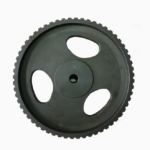
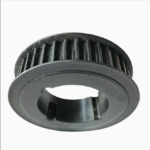
OEM Custom High Quality V Belt Pulley 3 Groove 14 Inch Diameter Forged Steel Pulley
Request a Quote
Enter the quantity you need and add to your quote list for pricing inquiries.
Product Details
A V belt pulley is a mechanical component with grooved channels designed to transmit rotational power between shafts using V-shaped belts. From industrial machinery and agricultural equipment to automotive engines and HVAC systems, the V belt pulley provides efficient power transmission with slip resistance, shock absorption, and alignment tolerance. Understanding the design features, materials, and selection criteria for this essential component is critical for engineers and maintenance professionals.
What Is a V Belt Pulley?
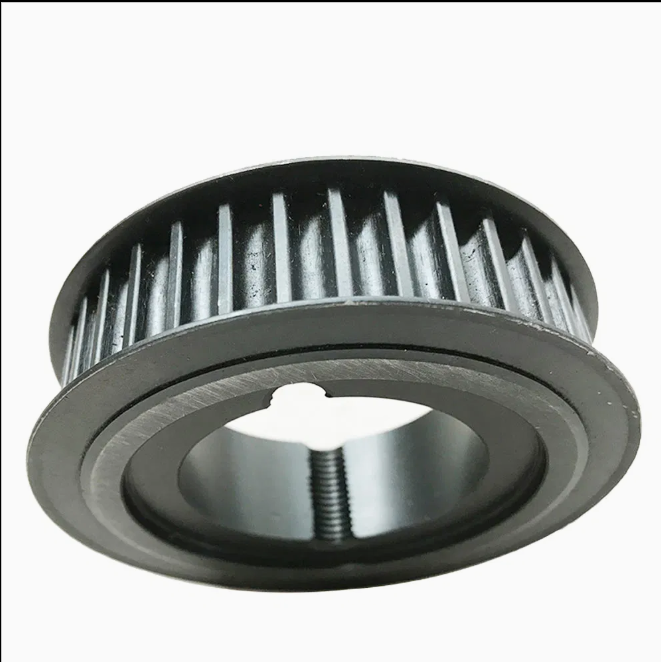
A V belt pulley is a wheel with one or more V-shaped grooves machined into its circumference, designed to engage with V-belts for power transmission. Unlike flat belt pulleys that rely on friction alone, it uses the wedging action of the belt into the groove to increase traction and reduce slip.
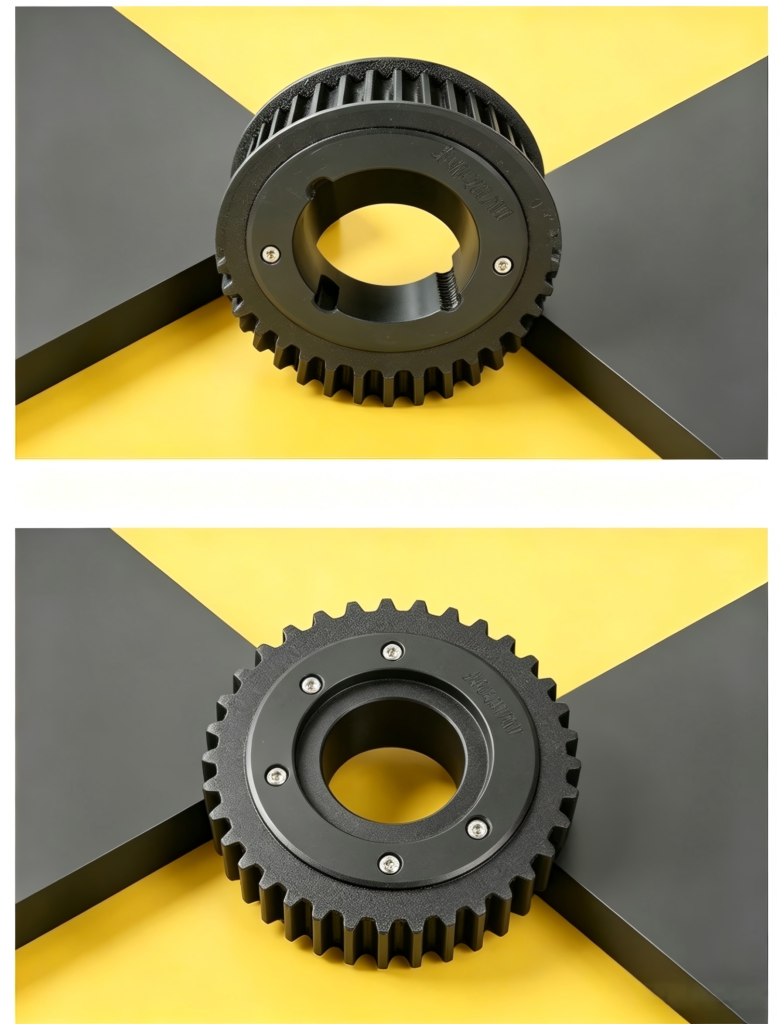
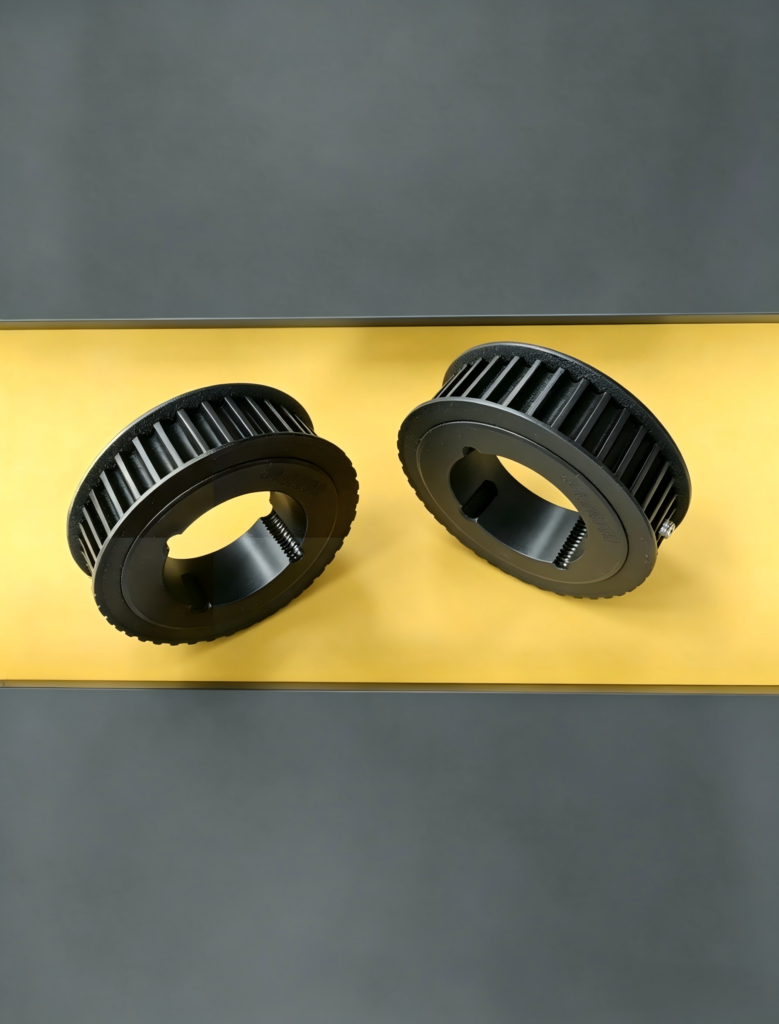
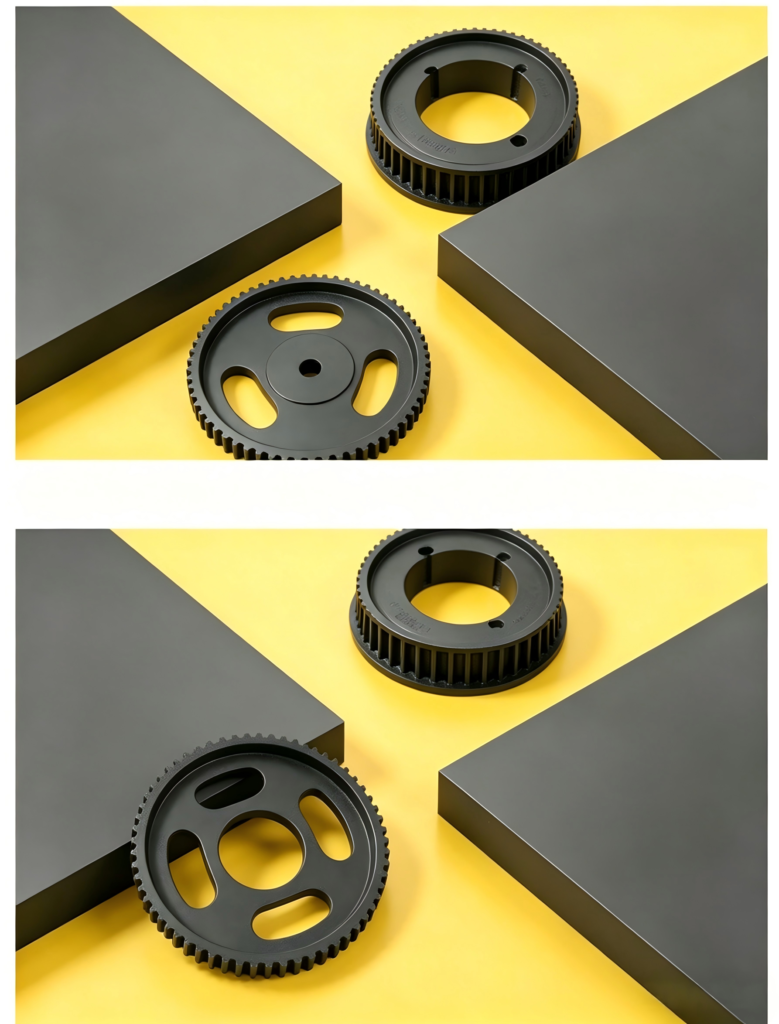
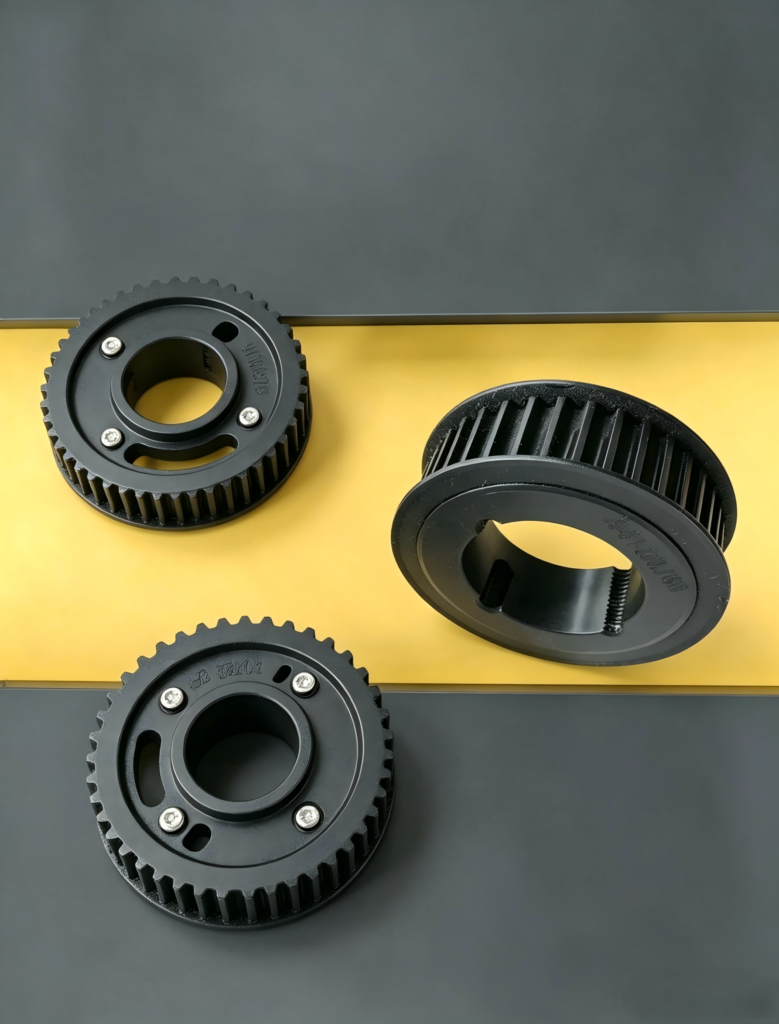
It is characterized by its groove profile, diameter, and number of grooves. Typical features include precision-machined grooves that match standard belt sections (A, B, C, D, or 3V, 5V, 8V), a hub with a bore for shaft mounting, keyways for torque transmission, and set screws or taper lock bushings for shaft attachment. Sizes typically range from 2 inches to 36 inches in diameter, with 1 to 12 grooves. It enables efficient power transmission with belt changes for speed variation.
Manufacturing Process:
The production of it follows several methods. For high-volume production, the pulley is cast from iron or aluminum. The casting is then machined to create the bore, keyway, and groove profiles. For precision applications, it is CNC machined from solid bar stock. Grooves are cut using specially shaped form tools or broaches. The pulley is dynamically balanced to reduce vibration at operating speed. Surface finishing includes painting, zinc plating, or leaving raw for corrosion protection.
Common Materials for V Belt Pulley:
Cast Iron is the most common material for its production. Grade G25 or G30 offers good strength, excellent wear resistance, and vibration damping. Suitable for industrial machinery, agricultural equipment, and heavy-duty applications.
Ductile Iron provides higher strength than gray cast iron. Suitable for high-torque and shock-load applications.
Steel offers superior strength for high-speed or high-torque applications. Fabricated steel pulleys are common for large diameters. Suitable for demanding industrial applications.
Aluminum is lightweight and corrosion resistant. Suitable for low-torque, high-speed applications and portable equipment.
Nylon/Plastic provides lightweight, corrosion-proof, and quiet operation. Suitable for light-duty applications and food processing.
Types of V Belt Pulley:
Single Groove:
A V belt pulley with one groove for single belt drives. Simplest configuration for light to medium power transmission.
Multiple Groove:
A V belt pulley with 2 to 12 grooves for multiple belt drives. Distributes load across several belts for higher power capacity.
Taper Lock:
A V belt pulley with a taper lock bushing for easy mounting and removal. Provides secure shaft attachment without keyway damage.
Variable Speed:
A V belt pulley with adjustable groove width for speed variation. Used on machinery requiring adjustable output speed.
Crowned:
A V belt pulley with slightly convex face to keep belt centered. Used on some older or specialized drive systems.
Key Specifications:
| Parameter | Typical Range |
| Diameter | 2 to 36 inches |
| Number of Grooves | 1 to 12 |
| Belt Section | A, B, C, D, 3V, 5V, 8V |
| Bore Size | 1/2 to 4 inches |
| Material | Cast iron, ductile iron, steel, aluminum |
| Balance Grade | G6.3 to G2.5 |
Applications Across Industries:
Industrial Machinery:
A V belt pulley drives conveyors, compressors, pumps, fans, and machine tools. Provides reliable power transmission with belt replacement for speed changes.
Agricultural Equipment:
A V belt pulley powers combines, tractors, balers, and harvesters. Withstands dirty, dusty environments.
HVAC Systems:
A V belt pulley drives blowers, fans, and air handlers. Quiet operation and vibration damping are essential.
Automotive:
A V belt pulley drives alternators, water pumps, power steering pumps, and air conditioning compressors.
Home Appliances:
A V belt pulley powers washing machines, dryers, and shop tools.
Excellent Use Case: Industrial Blower Drive
Background: A manufacturing plant had an industrial blower driven by a direct-coupled motor that failed frequently. Motor bearings failed due to misalignment and vibration.
Solution: A V belt pulley drive system was installed with 8-inch driver pulley and 16-inch driven pulley. Two B-section belts transmitted power while absorbing misalignment.
Results:
- Motor Life: Extended from 1 year to 5 years
- Vibration: 60 percent reduction in transmitted vibration
- Maintenance: Belt changes replaced motor repairs
- Speed Change: Blower speed adjusted by changing pulleys
- Cost: 70 percent reduction in drive maintenance costs
This case demonstrates how the V belt pulley absorbs misalignment and reduces component stress.
How to Select the Right V Belt Pulley:
Choosing the appropriate V belt pulley requires careful consideration of several factors. Power requirement determines the number of grooves and belt section. Speed ratio determines driver and driven pulley diameters. Shaft size determines bore diameter. Center distance determines pulley size limitations. Environmental conditions influence material selection, with cast iron for general use and stainless steel for corrosive environments.
Installation Best Practices:
Proper installation ensures the V belt pulley performs reliably. Align pulleys using straightedge or laser alignment tool. Apply correct belt tension using tension gauge. Do not pry belts onto pulleys—reduce center distance instead. Tighten set screws or taper lock bushing to specified torque. Check alignment after tensioning.
Maintenance and Care:
Regular maintenance extends V belt pulley life. Check belt tension periodically. Inspect grooves for wear—glazed or worn grooves indicate belt slip. Replace worn pulleys to prevent belt damage. Keep pulleys clean of oil and debris.
Common Failure Modes:
Understanding potential failures helps with preventive maintenance. Groove wear from belt slip, prevented by proper tension. Bearing failure from over-tension, prevented by using tension gauge. Pulley cracking from shock loads, prevented by using ductile iron for impact applications. Belt squeal from misalignment, prevented by proper pulley alignment.
Conclusion:
It represents a versatile, reliable solution for power transmission across countless industries. By providing slip resistance, shock absorption, and alignment tolerance, it protects driven components while efficiently transmitting power. By understanding the types, materials, and selection criteria outlined in this guide, the right V belt pulley can be selected for any application.