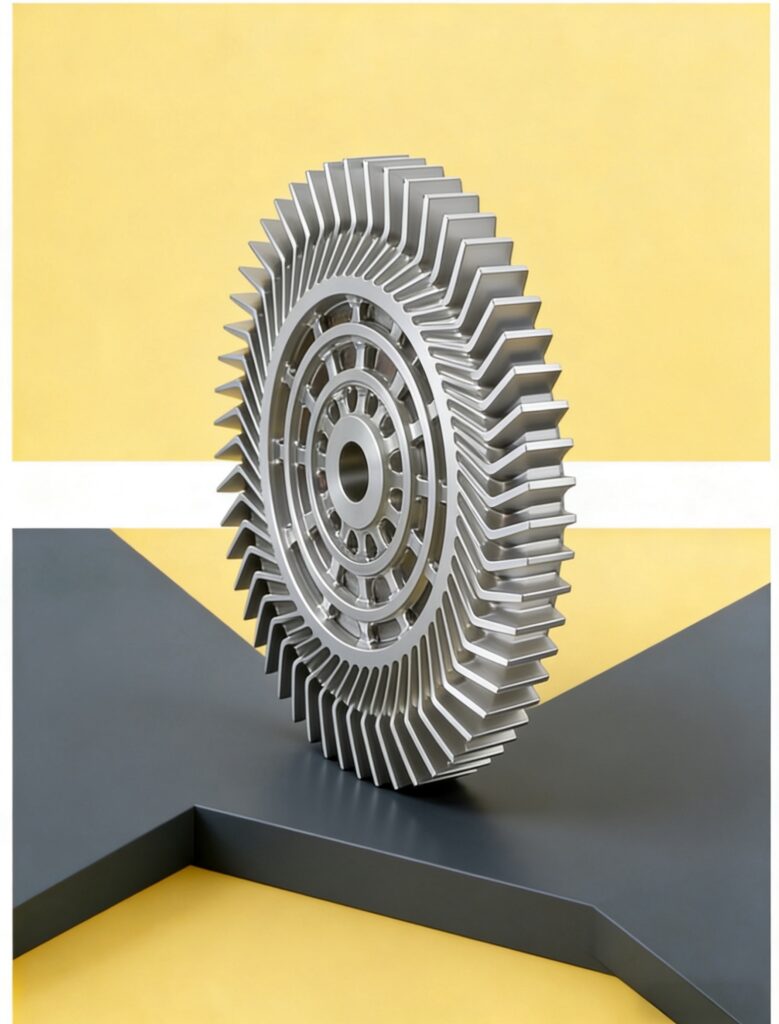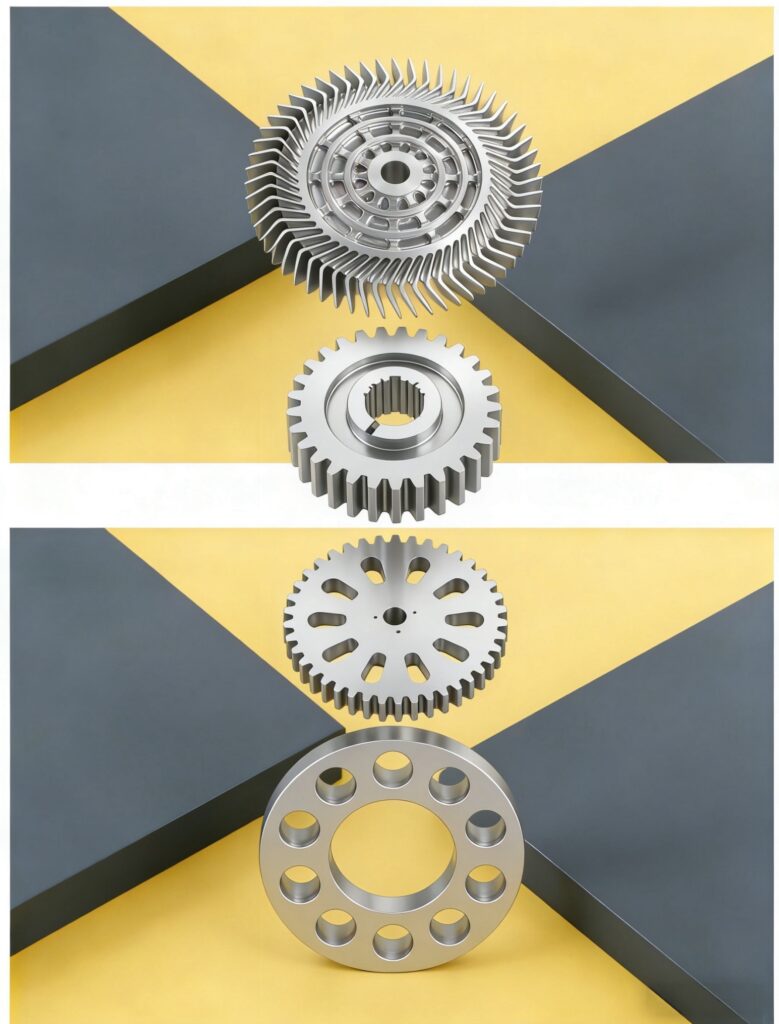
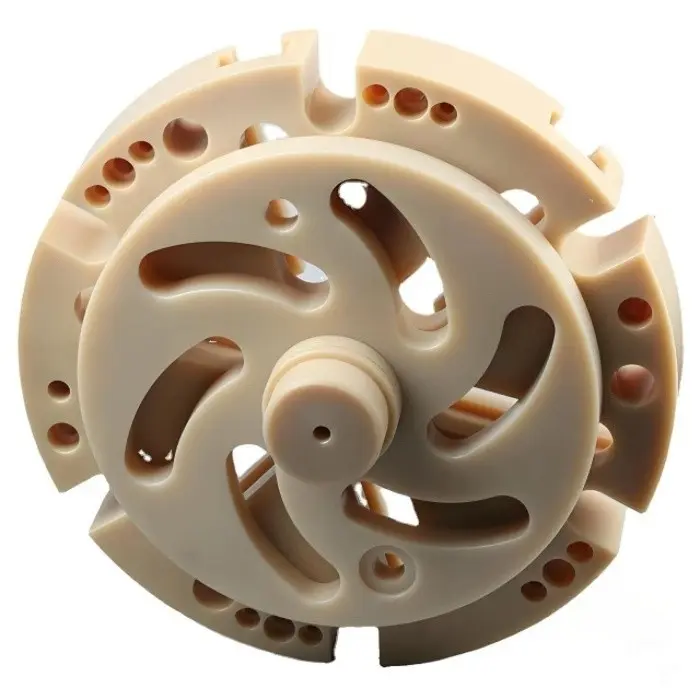
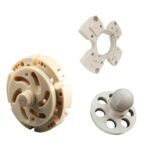
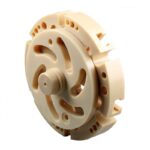
Customized 3D Profile CNC Machined Impeller Premium Quality Engineered Rotor
Request a Quote
Enter the quantity you need and add to your quote list for pricing inquiries.
Product Details
This precision machined impeller is manufactured using advanced 5 axis CNC technology ensuring exceptional dimensional accuracy and superior surface finish. Each unit undergoes rigorous dynamic balancing to guarantee vibration free operation at high rotational speeds. Engineered from high grade aluminum alloy or stainless steel it delivers reliable performance in aerospace medical and precision industrial applications where reliability is non negotiable.
What Is a Machined Impeller?
A machined impeller is a rotating component designed to impart energy to a fluid, manufactured through precision machining processes such as CNC milling, turning, or multi-axis machining rather than casting, forging, or molding. The impeller consists of a central hub with radiating vanes or blades that accelerate fluid outward from the center, converting rotational mechanical energy into fluid flow and pressure.
Machined impellers are typically produced from solid metal bar stock, billet, or forged blanks using computer numerically controlled (CNC) machining centers. This subtractive manufacturing approach allows for the creation of complex three dimensional blade geometries with tight tolerances, smooth surface finishes, and optimized flow characteristics that are often unattainable through traditional casting methods.
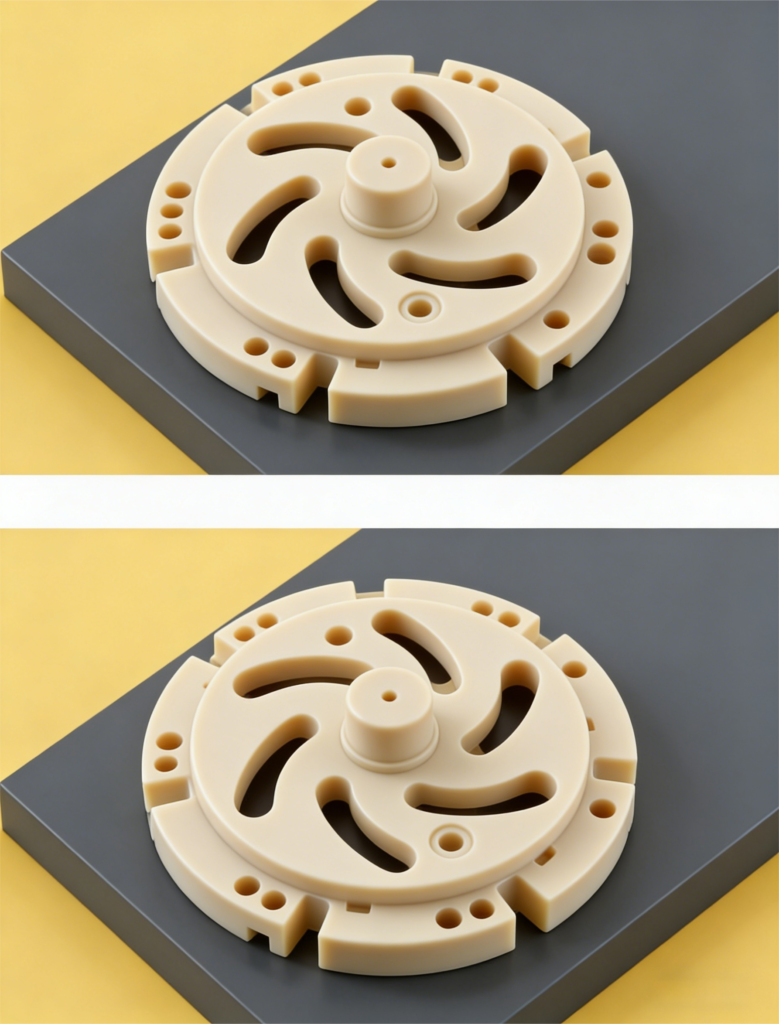
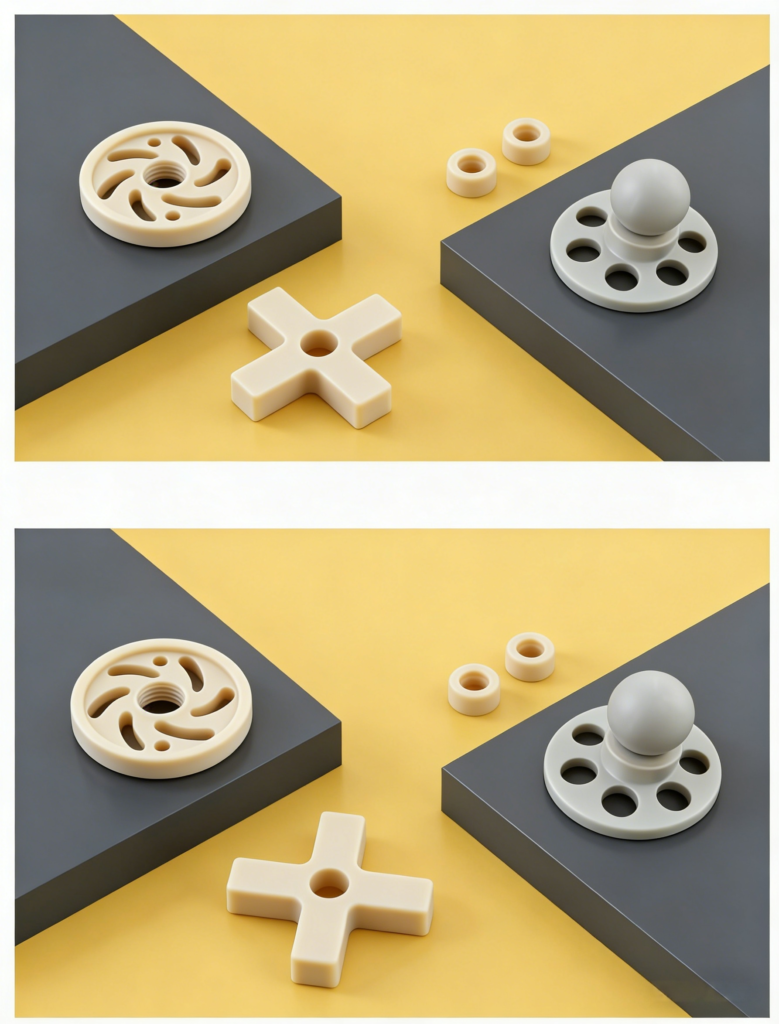
Manufacturing Processes for Machined Impellers:
The production of machined impellers involves several sophisticated manufacturing techniques, each suited to different design complexities, material requirements, and production volumes:
CNC 3-Axis Milling:
For simpler impeller designs with straight or mildly curved blades, 3-axis CNC milling machines can efficiently remove material from a solid block. The workpiece is held in a fixed orientation while cutting tools follow programmed toolpaths to shape the hub and blades.
CNC 4-Axis and 5-Axis Milling:
Complex impeller geometries with twisted, tapered, or contoured blades require multi-axis machining. 4-axis and 5-axis CNC machines allow the cutting tool to approach the workpiece from multiple angles, enabling the creation of undercuts, complex blade profiles, and smooth surface transitions without multiple setups. This is the preferred method for high-performance impellers used in aerospace, turbochargers, and advanced pump systems.
CNC Turning:
For impellers with primarily rotational symmetry, CNC lathes are used to machine the hub, backplate, and outer diameter features. Turning is often combined with milling operations to produce complete impellers in a single setup using mill-turn machining centers.
EDM (Electrical Discharge Machining):
For extremely hard materials or intricate features that are difficult to machine with conventional cutting tools, wire EDM or sinker EDM can be employed to achieve precise geometries with excellent surface finishes.
Hybrid Manufacturing:
In some cases, impellers are first forged or cast near-net shape, then finished with precision machining. This approach balances material efficiency with the high accuracy required for critical dimensions and flow surfaces.
Common Materials for Machined Impellers:
The choice of material for a machined impeller directly impacts its performance, durability, and suitability for specific environments:
Aluminum Alloys:
Aluminum is widely used for machined impellers due to its excellent strength-to-weight ratio, good machinability, and corrosion resistance. Common alloys include 6061, 7075, and 5083. Aluminum impellers are ideal for applications requiring low rotational inertia such as automotive superchargers, centrifugal fans, and lightweight pumps.
Stainless Steel:
Stainless steel impellers offer exceptional corrosion resistance, high strength, and good fatigue properties. Grades such as 304, 316, and 17-4 PH are commonly used. Stainless steel is the material of choice for marine pumps, chemical processing equipment, food and beverage applications, and medical devices where hygiene and corrosion resistance are critical.
Titanium Alloys:
Titanium provides an outstanding combination of high strength, low density, and exceptional corrosion resistance, even in seawater and aggressive chemical environments. Titanium impellers are used in aerospace fuel pumps, desalination plants, offshore platforms, and high-performance marine applications.
Nickel-Based Superalloys:
Alloys such as Inconel, Hastelloy, and Monel are used for impellers operating in extreme conditions, including high temperatures, corrosive environments, or both. These materials maintain strength and integrity at temperatures exceeding 1000°C, making them essential for gas turbine engines, cryogenic pumps, and chemical reactors.
Brass and Bronze:
Brass and bronze impellers offer good corrosion resistance, machinability, and anti-galling properties. They are commonly used in water pumps, marine applications, and historical restoration projects.
Engineering Plastics:
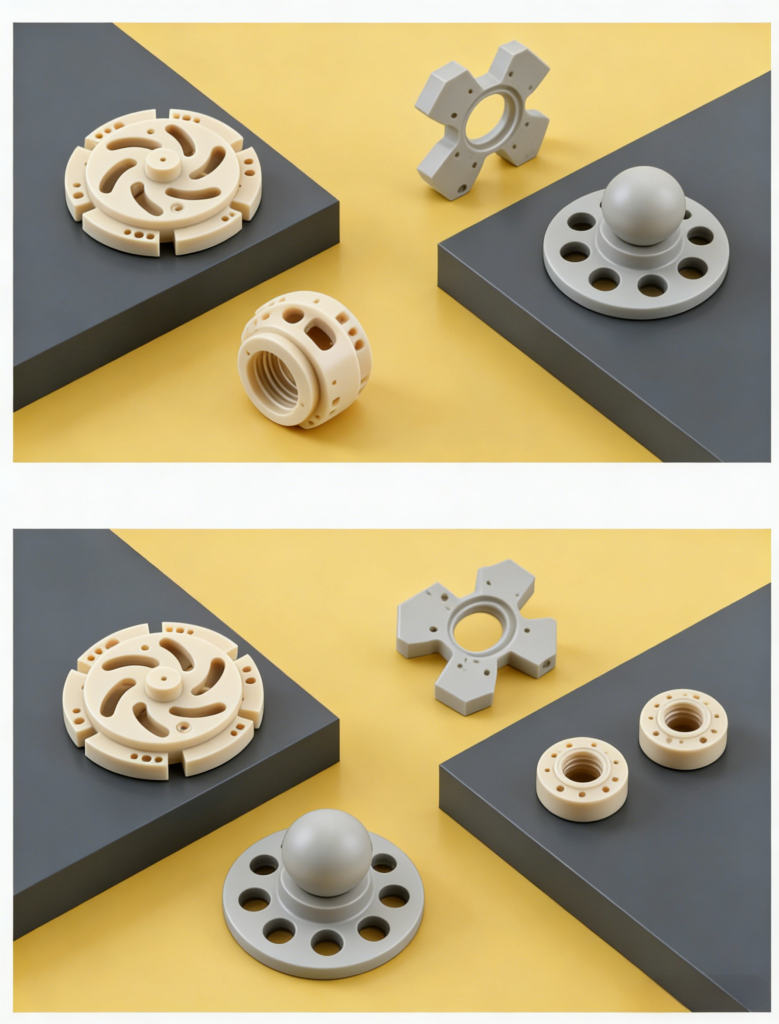
For lower load applications, machined impellers can be produced from high-performance plastics such as PEEK, PTFE, or acetal. These materials offer excellent chemical resistance, lightweight construction, and quiet operation.
Key Advantages of Machined Impellers:
Machined impellers offer distinct advantages over cast, forged, or molded alternatives, making them the preferred choice for high performance applications:
Superior Dimensional Accuracy:
Machining achieves tolerances as tight as ±0.005 mm, ensuring precise blade profiles, consistent blade spacing, and exact hub dimensions. This accuracy translates directly into predictable flow characteristics, balanced operation, and optimal efficiency.
Excellent Surface Finish:
Machined surfaces can achieve roughness values (Ra) as low as 0.4 microns or better. Smooth flow surfaces reduce friction losses, minimize turbulence, and improve overall hydraulic or aerodynamic efficiency.
Optimized Blade Geometry:
Complex three-dimensional blade contours, variable thickness profiles, and compound curves can be precisely machined to match computational fluid dynamics (CFD) optimized designs. This allows for maximum efficiency, reduced noise, and improved cavitation resistance.
Material Integrity:
Unlike castings that may contain internal porosity, inclusions, or shrinkage voids, machined impellers are produced from solid material with consistent, predictable mechanical properties throughout. This results in superior fatigue strength and reliability under cyclic loading.
Balanced Construction:
Machined impellers can be dynamically balanced to very high standards (ISO 1940 Grade G1.0 or better), minimizing vibration, reducing bearing wear, and extending equipment life.
No Tooling Costs:
For low to medium production volumes, machining eliminates the significant upfront investment in casting patterns, molds, or forging dies. Design changes can be implemented quickly without modifying expensive tooling.
Material Versatility:
Machining can be applied to virtually any machinable material, including those that are difficult or impossible to cast, such as certain high-performance alloys and heat-treated materials.
Key Applications Across Industries:
The precision and performance of machined impellers make them essential components across a wide range of industries:
Aerospace and Defense: Aircraft fuel pumps, hydraulic system pumps, environmental control system blowers, rocket engine turbopumps, and auxiliary power unit compressors rely on machined impellers for reliability under extreme conditions.
Automotive and Motorsports: Supercharger impellers, turbocharger compressor wheels, electric water pumps, fuel system pumps, and cooling fan assemblies benefit from the lightweight construction and high efficiency of machined impellers.
Oil and Gas: Downhole pumps, pipeline booster pumps, refinery process pumps, and LNG transfer pumps require the corrosion resistance and reliability of machined stainless steel or superalloy impellers.
Chemical and Pharmaceutical: Agitators, mixers, reactor impellers, and sanitary pumps demand the smooth surfaces, corrosion resistance, and cleanability of precision machined impellers.
Marine and Offshore: Ballast pumps, firefighting pumps, seawater cooling pumps, and propulsion system components utilize machined impellers for their corrosion resistance and reliability in harsh marine environments.
Power Generation: Gas turbine compressor stages, steam turbine rotors, cooling water pumps, and feedwater pumps depend on machined impellers for efficient power generation.
Water and Wastewater: High efficiency centrifugal pumps, booster stations, and treatment plant mixers use machined impellers for reliable, long term operation.
Medical and Laboratory: Centrifuges, diagnostic equipment pumps, and laboratory mixers benefit from the precision balance and cleanability of machined impellers.
Quality Control and Testing:
Reputable manufacturers of machined impellers implement rigorous quality control measures:
Dimensional Inspection: Coordinate measuring machines (CMM) verify critical dimensions including blade profiles, hub diameters, and mounting interfaces against engineering specifications.
Surface Finish Measurement: Profilometers verify that flow surfaces meet specified roughness requirements.
Dynamic Balancing: High speed balancing machines measure and correct imbalance to specified ISO grades, ensuring smooth operation and extended bearing life.
Non-Destructive Testing: For critical applications, methods such as fluorescent penetrant inspection (FPI), radiography, or ultrasonic testing detect surface or subsurface defects.
Material Verification: Positive material identification (PMI) using X-ray fluorescence (XRF) or optical emission spectroscopy verifies alloy composition.
Hydrostatic or Pneumatic Testing: For pump impellers, pressure testing verifies integrity and leak-tightness.
Industry Trends and Innovations:
The machined impeller market continues to evolve with advancing technologies:
Additive Manufacturing Integration: Hybrid approaches combining 3D printing near-net shapes with finish machining are emerging for complex, low volume impellers.
Advanced Coatings: Thermal spray coatings, diamond-like carbon (DLC), and ceramic coatings extend wear life and improve efficiency.
Digital Twin Technology: CFD simulations integrated with manufacturing data create digital twins that optimize impeller performance throughout the service life.
Smart Impellers: Embedded sensors for real-time monitoring of vibration, temperature, and flow conditions enable predictive maintenance.
Conclusion:
The machined impeller represents the pinnacle of precision engineering in fluid dynamics. Its ability to deliver superior dimensional accuracy, optimized blade geometry, material integrity, and balanced operation makes it the preferred choice for applications where performance, reliability, and efficiency are paramount. Whether for aerospace fuel systems, high performance automotive superchargers, chemical processing pumps, or medical centrifuges, machined impellers provide the precision and dependability that critical applications demand.
By understanding the manufacturing processes, material options, selection criteria, and design considerations outlined in this guide, engineers and procurement professionals can make informed decisions that optimize system performance, reduce lifecycle costs, and ensure long term reliability.